April 29, 2009

Book Review: Latter-day Cipher

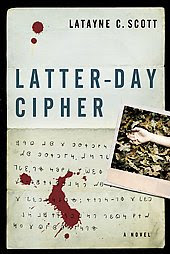
Latayne C. Scott, Latter-day Cipher. Chicago: Moody Publishers, 2009.

Latter-day CipherWhat happens when you take a fictional suspense-thriller and place it in Utah, the center of Mormonism? Latayne C. Scott gives us an example in her novel Latter-day Cipher. A former Mormon who converted to evangelical Christianity, Scott helps readers understand Mormonism through a murder mystery.

The main character is Selonnah Zee, who winds up in Utah when the murders begin taking place. As a journalist, she is quickly assigned to cover the growing number of deaths which are connected by Mormonism and its history. In reporting on these complex cases, she finds herself embarking on a crash course in Mormonism, from her LDS cousin Roger to her newfound local reporter friend Anne. Can Selonnah wrap her mind around Mormonism enough to solve these crimes? And what will these crimes expose about the Mormon church? You’ll have to read the book to find out.

I admit up front that I don’t read a lot of fiction, so I’m not evaluating the book’s literary merits from a position of strength. I can see reviewers critiquing Scott’s work as being somewhat underdeveloped, with the plot serving primarily as a vehicle for teaching readers about Mormonism. With this in mind, the book may fall short for someone who’s simply looking for a good thriller.

At the same time, I really appreciate Scott in her attempt to creatively educate people about Mormonism. Many Christians and others may never pick up a book summarizing and evaluating LDS teaching. But they would likely be drawn to a contemporary murder mystery novel which is filled with information on Mormonism’s history and beliefs. Consequently, as a teaching tool, I really like her book. I would definitely give it to a Christian friend who enjoys this kind of fictional work. It even has questions for discussion in the back to think through some of the concerns and issues that she raises.

Nevertheless, I should offer a few disclaimers. First, given the nature of the crimes, the storytelling can be graphic and may be inappropriate for some readers. Second, Selonnah’s friend Anne is a Christian who explains the Trinity by using the analogy of three states of water (ice, water, and steam)—a common illustration that’s fundamentally flawed and can lead to a misunderstanding of the nature of God. Third, I don’t think the ending provides sufficient closure to the story. I can only assume that this book is meant to be the first of a series, but I felt like the book just kind of abruptly ended.

In any case, I don’t believe that these caveats should necessarily prevent Christians from reading an entertaining page-turner which will also inform them a great deal about Mormonism. I pray that the Lord will use Latter-day Cipher to better prepare His people to lovingly respond to the errors of Mormonism with the truth of biblical Christianity.

April 28, 2009

Visiting the Baha'i House of Worship


Last week I wrote about attending the annual conference of the International Society of Christian Apologetics (ISCA). While in the Chicago area, Paul Carden (the executive director of our parent ministry) and I also visited the Bahá’í House of Worship. This House of Worship is the only one on the North American continent, and one of just seven in the world.

As a side note before I move on, guess where one of the other Bahá’í Houses of Worship is? You guessed it: in Uganda, where I plan to launch our ministry.

I have to admit that I was amazed by the architecture of the House of Worship in Wilmette, Ill. It’s truly a sight to behold, with a seating capacity of nearly 1,200 and a dome that’s 90 feet in diameter. Quotations like these from the Prophet Bahá’u’lláh appear over all the entrances and alcoves:
  • “All of the Prophets of God proclaim the same faith.”
  • “Thy heart is My home; sanctify it for My descent.”
  • “So powerful is unity’s light that it can illumine the whole earth.”
After we finished looking at the building, we spent an hour and a half or so with a tour guide, who was a fifth-generation Bahá’í and very friendly. We asked her lots of questions to better understand the faith, learn why she’s a follower, and politely challenge her misperceptions (and misrepresentations) of Christianity and the Gospel. Our time together was very educational, and I can easily see why it appeals to so many Westerners today.

But what is the Bahá’í faith? For most people in America, it’s still a fairly unknown and mysterious religion. An offshoot of Islam, its central theme is: “Bahá’ís believe that there is one God, that all humanity is one family, and that there is a fundamental unity underlying religion.” Thus, God has sent a series of “manifestations” or divine messengers, namely: Adam, Noah, Zoroaster, Krishna, Abraham, Buddha, Jesus, Muhammad, the Báb, and Bahá’u’lláh. Each messenger builds off the truths taught by preceding prophets, thus opening new vistas of spiritual insight as humanity becomes ready for them. The latest manifestation was Bahá’u’lláh (1817–1892), who provides the fullest and most thorough understanding of God and our purpose in the world.

Bahá’ís do not see Jesus as God incarnate, but as simply one of the nine messengers. They generally interpret the Bible as symbolic instead of accepting its literal meaning. Bahá’u’lláh is said to fulfill Jesus’ Second Coming and complete His teachings. Essentially, Bahá’ís force Jesus to fit into their mold of religious history in order to claim him as their own. In so doing they deny who He is and the redemption He has accomplished.

Consequently, I left the Bahá’í House of Worship more committed than ever to respond to such falsehoods with the true gospel of Jesus Christ. By counterfeiting Jesus, Bahá’ís are keeping others from knowing the genuine Savior who brings true hope and peace with God.

Pray with me that the Lord will use us to equip our African brothers and sisters in Christ to meet this challenge!

April 25, 2009

Weekly Round-Up

Here's the latest for this week's round-up:

1) Mwangi Muiruri, "Gang now takes war to the church" and "Mungiki: Victims tell of their ordeal in hands of sect" in The Standard newspaper (Kenya). Mungiki is a growing, violent sect which has been gaining ground for years in Kenya. Here are two reports that demonstrate the serious challenge it presents to Christians in East Africa.

2) Robert Kalumba, "Ugandan pastors and their lifestyles" in the Sunday Monitor newspaper (Uganda). The subtitle summarizes this article well: "If it wasn’t for their job titles, some of our pastors would be mistaken for CEOs of multinational companies." While I would not consider some of those included in this list Ugandan pastors, it nevertheless provides insight into the success of the false prosperity gospel in Uganda.

3) Michael J. Ssali, "The healing powers of Mutume" in the Sunday Monitor newspaper (Uganda). This news story introduces us to a Ugandan Catholic miracle worker who has an increasing number of followers even as the Catholic church is trying to rein him in. The report notes that Mutume (which in Luganda means Apostle) "has attracted a considerable following and could soon be the leader of a new break-away sect from the Catholic Church."

April 22, 2009

Book Notice: The Dawning of a Brighter Day

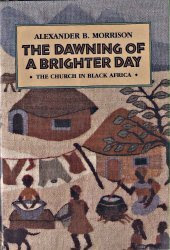
Alexander B. Morrison, The Dawning of a Brighter Day: The Church in Black Africa. Salt Lake City: Deseret Book Company, 1990; 149 pp.

The Dawning of a Brighter DayThough Mormons have always zealously sought to convert others to their faith, in many ways their “last frontier” has been Africa. Given its long history of racism toward Africans, the LDS church’s early missionary efforts generally steered clear of black Africa. All of this changed when the LDS church released “Official Declaration—2” in 1978, allowing “worthy” Mormon males of African descent to hold the priesthood. Today the church reports amazing success over much of the continent, and with the recent announcement of the first black African general authority, Mormonism seems poised for even greater expansion—and confrontation with evangelical Christians.

Alexander B. Morrison, now an emeritus member of the First Quorum of the Seventy, recalls his church’s transformation from outsider to “contender” in Africa in The Dawning of a Brighter Day. Even though the book is now out of print, the fact that it was released by the official LDS publishing house testifies to its importance in understanding the changing face of Mormonism in Africa.

At the church’s October 1987 general conference, Morrison declared that “our humble African brothers and sisters are well prepared to receive and obey the fulness of the gospel of Christ”—that is, the message of Joseph Smith. Let us pray that the Body of Christ will prepare itself and resist.

From the inside cover:
“In some ways establishing the gospel in Africa represents the most difficult challenge the Church has ever had to face....We will succeed in Africa only as we learn and come to understand the oftentimes confusing social, political, historical, and economic realities of that vast continent and base what we do on real knowledge.”

So writes Alexander B. Morrison....In The Dawning of a Brighter Day, Elder Morrison describes some of the “confusing realities” of Black Africa, particularly as they pertain to proselyting efforts of the Church there.

“The golden key that unlocked the door to bringing the fullness of the gospel to Black Africa was the revelation on priesthood, received in June 1978,” he explains. Since then, missions and stakes have been established in several countries, and many faithful individuals have been converted and are ass uming leadership roles among the members.

Today, “the clouds if a long night’s darkness are beginning to roll away from Africa as a new day dawns,” Elder Morrison concludes. “It is a day whose light is the Son of God, a day made brighter by the glow of the glorious gospel of Christ.”

April 20, 2009

Iron Sharpening Iron in Chicago

International Society of Christian ApologeticsLate last night I returned from the fourth annual conference of the International Society of Christian Apologetics (ISCA). This year it was on the campus of Trinity International University, which houses the well-known Trinity Evangelical Divinity School. It was my first time to the Chicago area (unless you count brief layovers in the O'Hare airport) as well as my first time to be a part of this conference.

What a blessing! Reflecting on my weekend, I thank God for so many things. Here are a few:

I met lots of brothers and sisters in Christ committed to defending His truth, including several scholars which have been very influential in my spiritual growth and service. This included men such as Rob Bowman, Winfried Corduan, Norman Geisler, Wayne House, Chad Meister, and Phil Roberts. I am honored to have met and talked with these experienced apologists.

I learned how to better defend my faith through several incredibly informative workshops and sessions. Obviously I cannot give my thoughts of each one, but I must mention one session that I found especially important—"The Ethics of Apologetics" by David Cook of Wheaton College. Cook spoke from his heart and experience, listing several key considerations apologists must keep in mind as we counter error. I only wish that they recorded the session!

I was able to strategize with Paul Carden on the future of ACFAR. While I cannot say too much about our discussions yet, we were able to accomplish a great deal. You should be hearing about some wonderful developments over the next several weeks, so be sure to stay tuned!

I worshiped on the Lord's Day at Village Bible Church. I greatly enjoyed my time there, praising God with fellow believers and hearing His Word faithfully proclaimed. Pastor Ray Gurunian's sermon was a deeply edifying message on a very hard passage of Scripture (have you ever heard a sermon on Matthew 7:6?!?).

I may have come home tired, but by God's grace we accomplished so much. With so many challenges facing the church today, it is easy to lose heart. But last weekend reminded me that the church of Christ will not fail—the gates of hell shall not prevail against it. Praise God!

April 17, 2009

Weekly Round-Up

Here's the latest for this week's round-up:

Joseph Sitati1) Peggy Fletcher Stack, "Africa's 'Mormon superstar' is first black African LDS general authority" in the Salt Lake Tribune newspaper. Three decades after worthy African males were allowed to hold the Mormon priesthood, the LDS church's first black African general authority has been named. Joseph W. Sitati is a Kenyan and former President of the Nigeria Calabar mission. His appointment is evidence of the LDS church's growing commitment and missionary success in Africa.

2) Peggy Fletcher Stack, "LDS Swahili Branch unites African Mormons" in the Salt Lake Tribune newspaper. As Mormonism continues to spread throughout Africa, it is also seeking to convert Africans here in America. This article reports on a branch in Utah that conducts its meetings in Swahili.

3) John MacArthur, "Doctrine IS Practical" in Pulpit Magazine. As only MacArthur can, he gives a compelling demonstration of the importance of doctrinal truth for Christians today.

April 15, 2009

Viral Video: The Lausanne Movement and its History

As an avid supporter of the Lausanne Movement, I am thrilled that they have established a YouTube channel to post videos on their movement and modern missions work. However, I realize that many people are not very familiar with one of evangelicalism's most important global efforts. To do my small part, I am turning over today's Viral Video post to a series of videos explaining the Lausanne Movement and its history. Enjoy!