Showing posts with label African Christianity. Show all posts

July 3, 2012

A Warning on Chris Oyakhilome

Last week, J. Lee Grady of Charisma magazine posted “False Prophets, Foreign Charlatans and Global Deception,” a harsh warning about Nigerian televangelist Chris Oyakhilome of Christ Embassy International.

Grady writes that Oyakhilome is now a controversial figure in Romania, where some Christian leaders “have sounded an alarm. One of them, Ioan Peia, released a public warning in 2011 listing various false doctrines promoted by Oyakhilome.” Read a translation here.

Grady’s article is all the more significant because in the past his magazine has unashamedly promoted the “ministries” of Benny Hinn, Kenneth Hagin, and other false teachers.

May 27, 2009

Book Review: African Reformation

Since African Apologetics has picked up a large number of new visitors and subscribers, we are re-running another one of John's important book reviews.
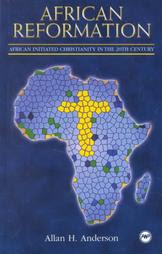
African ReformationAllan H. Anderson, African Reformation: African Initiated Christianity in the 20th Century (Trenton, NJ: Africa World Press, Inc., 2001), 282 pp.

The twentieth century witnessed the rapid expansion of Christianity throughout Africa. One of the main avenues of growth was in African Initiated Churches (AICs). These churches began in Africa and were started by Africans (not missionaries). What can we learn about their origins and development? How should we understand their place in global Christianity? Allan Anderson answers these questions in African Reformation. A white South African who is involved with AICs, Anderson combines his experience and knowledge with thorough research in this work.

The result is a book that is broken into three parts: context, history, and lessons. The author begins by seeking to characterize AICs and then moves to examining their causes. Next, he devotes a chapter to each region of Africa, summarizing the formation and progression of AICs through the twentieth century. Finally, Anderson concludes by providing an analysis of AICs in light of contemporary questions and issues.

I am amazed at how much information is packed into African Reformation. It is a veritable treasure trove of data on AICs. I will regularly consult this book as I conduct research on African Christianity. It will be an invaluable resource in understanding numerous churches and denominations in Africa.

At the same time, I found Anderson's third section lacking. As an "insider," he dismisses theological challenges far too easily and goes out of his way to minimize charges of syncretism. He essentially submerges Christianity into cultures, leaving us with numerous contextual theologies rather than with an overarching revealed Theology. As a result, he denigrates theology and philosophy while emphasizing experience and the dynamic, ever-changing nature of "spiritual" Christianity.

Anderson's treatment of salvation and the gospel is especially troubling. He writes:
"Salvation" in Africa needs to be related to more than an esoteric idea of the "salvation of the soul" and the life hereafter. It must be oriented to the whole of life's problems as experienced by people in their cities and villages. . . . Many AICs see "salvation" not exclusively in terms of salvation of sinful acts and from eternal condemnation in the life hereafter (the salvation of the soul), but also in terms of salvation from sickness (healing), from evil spirits (exorcism), and from other forms of misfortune" (233).
While Paul Hiebert and other missionaries today are correct in pointing out Western Christianity's unbiblical segregation of the natural and supernatural worlds leaving an excluded middle, expanding salvation itself into deliverance in this world easily corrupts the gospel. The fundamental problem in this world is our rebellion against God, not poverty, sickness, or evil spirits. Far from being esoteric, salvation from God's just wrath gives us true joy and hope. This does not mean that the gospel has nothing to do with the many challenges in our world, but they must be seen in light of our relationship to our Creator. We must distinguish between salvation in Christ and the many other ways that God works in this world.

In any case, there is a lot to like about Anderson's book. He has done all of us who are involved in African ministry a great service by providing so much material in one place. At the same time, his analysis must be read critically. For the discerning reader, African Reformation will prove tremendously useful.

May 23, 2009

Weekly Round-Up

Here's the latest for this week's round-up:

1) Dan Harris and Almin Karamehmedovic, "Child Witches: Accused in the Name of Jesus" on the Nightline television program. While witchcraft in Africa is very real, there is a growing danger throughout the continent of Christians accusing children of witchcraft and submitting them to extremely violent exorcisms. You'll want to make thew time to watch and/or read this report.

2) Patrick Jaramogi, "Hindu spiritual leader Swami visits" in the New Vision newspaper (Uganda). When people think about religions in Africa, most will not point to Hinduism. But here we see the status of Hinduism in Uganda, with the Hindu spiritual leader His Holiness Swami Sri Satyamitranand Giriji Maharaj coming for a five-day visit.

3) Jason Swensen, "Full joy found in principles of the gospel" in the Church News. I have previously mentioned Mormonism's first black African general authority. Here is a follow-up piece, covering his background in Africa and history with the LDS church.

May 13, 2009

Book Review: Theological Pitfalls in Africa

Since African Apologetics has picked up a large number of new visitors and subscribers, for the next few Wednesdays we will be re-running some of John's important book reviews.

Theological Pitfalls in Africa
Byang H. Kato, Theological Pitfalls in Africa (Nairobi, Kenya: Evangel Publishing House, 1975), 200 pp.
At a small Anglican bookshop in Uganda, my eyes stopped when I came across a book on a crowded shelf. Immediately the title struck me--Theological Pitfalls in Africa. Intrigued, I picked up a copy and purchased it. I had never heard of Byang H. Kato (you can read an informative bio here), but I am always interested in learning more about theological controversies where I will be serving my Lord.
Needless to say, I made a wise investment. Kato responds to two dangerous trends he saw emerging in Africa: the growth of universalism and the danger of syncretism within contemporary African theology. Through the continuing influence of ecumenicism and liberal Christian scholarship, Kato writes about the increasing compromise and even abandonment of biblical Christianity throughout the continent.
In this book the author singles out for critique African theologians John Mbiti and Bolaji Idowu, as well as the ecumenical All Africa Conference of Churches (AACC). Through several chapters, he analyzes and replies to numerous problems that have been produced by these Christian leaders. His primary objective is to demonstrate the uniqueness and exclusivity of biblical Christianity against attempts to find parallels and continuity with African Traditional Religions. Additionally, as he records the progress of the ecumenical movement in Africa, he points to the need for an uncompromising evangelical alternative.
I greatly appreciate Kato's wisdom and doctrinal insightfulness throughout this work. He gave me much to think about. However, I do want to mention two cautionary notes. First, I am not sure that Kato is always properly summarizing the views of those whom he disagrees with. Having read some Mbiti, while a lot of Kato's critique is entirely appropriate, I also wonder if Mbiti is always properly understood. Occasionally, I wonder if Kato has set up a straw man only to quickly tear it back down.
Second, this book is rather dated. Of course, its age is not the author's fault! He actually prematurely died not long after this book was published (1975). Nevertheless, I can't help but wonder about the last 30-plus years. How prevalent is the ecumenical movement in Africa today? Where does African liberalism stand compared to the growth of evangelical scholarship? Are there more pressing theological challenges faced by Christians today? Answers to these questions must be found elsewhere.
In spite of these minor concerns, I still heartily recommend Kato's book for anyone looking to learn more about some theological dangers present in Africa today. While I am not sure how easy this book will be to buy outside of Africa, I assure you that it is worth the effort. May we be ever vigilant in our commitment to the Word of God, refuting all attempts to overthrow God's revealed truth!

April 25, 2009

Weekly Round-Up

Here's the latest for this week's round-up:

1) Mwangi Muiruri, "Gang now takes war to the church" and "Mungiki: Victims tell of their ordeal in hands of sect" in The Standard newspaper (Kenya). Mungiki is a growing, violent sect which has been gaining ground for years in Kenya. Here are two reports that demonstrate the serious challenge it presents to Christians in East Africa.

2) Robert Kalumba, "Ugandan pastors and their lifestyles" in the Sunday Monitor newspaper (Uganda). The subtitle summarizes this article well: "If it wasn’t for their job titles, some of our pastors would be mistaken for CEOs of multinational companies." While I would not consider some of those included in this list Ugandan pastors, it nevertheless provides insight into the success of the false prosperity gospel in Uganda.

3) Michael J. Ssali, "The healing powers of Mutume" in the Sunday Monitor newspaper (Uganda). This news story introduces us to a Ugandan Catholic miracle worker who has an increasing number of followers even as the Catholic church is trying to rein him in. The report notes that Mutume (which in Luganda means Apostle) "has attracted a considerable following and could soon be the leader of a new break-away sect from the Catholic Church."

April 10, 2009

Weekly Round-Up

On this Good Friday when we remember the sacrificial death of our Savior, I want to provide a couple of important articles for this week's round-up:

1) Paul Kiwuuwa, "Christians to mark Jesus’ suffering in Friday walk" in the New Vision newspaper (Uganda). How are many Ugandan Christians celebrating Good Friday and Easter? You can read more about their united plans here.

2) Andrew Rice, "Mission From Africa" in the New York Times magazine. This is a long but extremely important piece in the latest issue of the New York Times magazine. Here we learn more about the growth of Pentecostalism in Africa and their spreading influence throughout the world, mainly as reported through the Redeemed Christian Church of God. A Nigerian based denomination, this group is rapidly expanding globally and has ambitious plans here in the US. Also, be sure to listen to this excerpt of Pastor Daniel Ajayi-Adeniran preaching.

April 8, 2009

Yusufu Turaki on Western and African Worldviews

Yusufu TurakiSince no one submitted a question for Ask Anything Wednesday, I thought it would be a good opportunity to point out an important article analyzing Western and African worldviews. "Sharing the Burden of Defending the Gospel" was written by Yusufu Turaki, a Nigerian theologian at Jos Theological Seminary. Turaki's paper is essential reading to understand African Christianity today, especially as it so often mixes with traditional beliefs and practices or leads to cultic groups. Here is the introduction to whet your appetite:
"This paper is divided into two major parts: (1) the first examines modern Western worldviews, philosophies and religions; and (2) the second part analyzes traditional African worldviews and religious beliefs, syncretism, and religious cults.

"In the first part of the paper, I will consider the socio-political context and the environment which gave rise to both the modern philosophies and religions that are opposed to Christianity. In the second section of the paper, in which I analyze traditional African worldviews and religious beliefs and practices, a major focus will be on the ways in which African Christians often lapse into syncretism and religious cults in the expressions of their Christianity."

March 28, 2009

Weekly Round-Up

Here's the latest for this week's round-up:

1) Michael Mubangizi, "Fire in the name of God" and "Cult leaders were caught having sex, which was forbidden" in the Weekly Observer newspaper, and "Kanungu massacre: Why govt must rein in cults" in the New Vision newspaper (both papers come from Uganda). I wrote of the anniversary of the Kanungu tragedy last week, but newspapers are continuing to report on the this tragic end to the Movement for the Restoration of the Ten Commandments of God. These are three more informative articles.

2) Josephine Maseruka, "Born-again churches reject federation" in the New Vision newspaper (Uganda). Here we see some courageous Ugandan pastors standing up against false teaching in the formation of a new "born again" united federation. Unity must never come at the expense of truth!

3) David Gibson, "Is One Man's Faith Another's Superstition?" in the Wall Street Journal newspaper. This one is an opinion piece reflecting on Pope Benedict's time in Angola. Yet again we see the danger of witchcraft and syncretism in Africa.

4) "The New Apostolic Church of East Africa soon to become independent" in the New Apostolic Church International News. The success in Africa of the New Apostolic Church, a Swiss-based cult, has been so dramatic that they are restructuring. Chief Apostle Wilhelm Leber, the international church leader, will be conducting a service in Kampala, Uganda today.

March 13, 2009

Weekly Round-Up

Here's the latest for this week's round-up:

1) Ruth Kang`ong`oi, "Is there a 'bright' side to witchcraft?" in the New Times newspaper (Rwanda). This report shows how ingrained witchcraft and sorcery are in Africa. I pray that living with such fear will be overcome with the gospel, bringing in Christ grace and hope to Africans!

2) Jamie Dean, "One-man war" in World magazine. World magazine is an excellent newsweekly which is rooted in the biblical worldview. Their latest issue has an article on Joseph Kony and the Lord's Resistance Army. Once again, we see how this spirit medium and his terrorist organization are wreaking havoc in East Africa.

3) "Episode 16" of the Persecution Podcast (MP3). As far as I am concerned, every Christian should stay informed and become involved with our brothers and sisters in Christ who are facing persecution all over the world. The latest edition of this Voice of the Martyrs audio podcast includes a discussion of the Islamic persecution against Nigerians.

4) Serious.Life magazine. The latest issue of Serious.Life was released this week, and African Apologetics is included in their Featured Blog Directory (on page 173). If you are interested in learning more, be sure to check it out. Subscriptions are free.

February 21, 2009

Weekly Round-Up

Here's the latest for this week's round-up:

1) Rachel Kabejja, "What’s with men of God and titles lately?" in the Sunday Monitor newspaper (Uganda). This writer looks into the frequent lack of theological knowledge and training among the pastors and church leaders in Uganda. She also researches several options available for educating church leaders.

2) Hamadou Tidiane Sy, "Senegalese president admits he was a Freemason and causes controversy" in the Daily Nation newspaper (Kenya). The title pretty much says it all, but the story becomes even more interesting when one recognizes that Senegal is a predominantly Muslim country.

3) "The Pygmies Of Yeyimbo" Part 1 and Part 2 in the Catch the Vision Update. Earlier this month, the Branhamites put out a two part update on their ministry among the Pygmy believers in Africa. In these articles, you can read firsthand about this cult's success in the continent.

4) Erich Bridges, "Healing Africa's wounded urban heart" in Baptist Press. Last Thursday, Baptist Press devoted their stories to mission work in Nairobi, Kenya. All of the reports are worth reading. But this article includes an important quote from a missionary serving there: "Nairobi has every religion you can find in the world: Hindu, Buddhist, animist, African traditional religions, Christianity, hundreds of cults." May Christ advance biblical discernment and the defense of our faith in East Africa!

February 6, 2009

Weekly Round-Up

Here's the latest for this week's round-up:

1) "Anti-Christian Gaddafi Takes Over as AU Chair" in Catholic Information Services for Africa. I have previously mentioned the controversy surrounding Muammar Gaddafi in East Africa. Now he has been elected chairman of the African Union. His new position could impact the Christian-Muslim relationship in Africa. We'll have to see.

2) "Christians in Africa Face Persecution" on CBN News. Here is an important news story about the persecution facing our brothers and sisters in Christ. The report even mentions Uganda's Lord's Resistance Army. Let us pray for Christians in Africa!

3) "City Opens For Missionary Work In the DR Congo" on the LDS Church Growth Blog. Mormons continue to have success in Africa. Here is a blog post celebrating their latest advance in the Democratic Republic of Congo. Their false claims need to be countered with the true gospel of Jesus Christ.

4) Michael Oh, "Missions as Fasting: The Forsaking of Things Present for the Global Exaltation of Christ" on the Desiring God web site. Would you like to be challenged and convicted? Then listen to or watch Oh's message from the Desiring God 2009 Conference for Pastors. And if you would like to join me in fasting and prayer for our East African ministry, then please let me know.

January 26, 2009

Theology in Africa

Evangelical Review of TheologyLast week I mentioned coming across an issue of the Evangelical Review of Theology (ERT) that’s been valuable to my preparations for serving Christ in East Africa. One especially noteworthy article is “The Contemporary Theological Situation in Africa: An Overview” by Dr. James Nkansah-Obrempong, a Ghanaian theologian who teaches at Nairobi Evangelical Graduate School of Theology.

First, Nkansah-Obrempong describes efforts by Christians to regain their identity as the continent emerged from the colonial era. Next he moves through the interaction of African theologies with culture and explains how Africans have engaged in theological reflection. Finally he examines the fruit, achievements, and future of African theological reflection today.

I’m gaining much by listening to the voices of African Christian leaders, and Nkansah-Obrempong is no exception; his overview has helped me to better understand the current state of theology in Africa. I especially appreciate his desire to balance the need to contextualize God’s truth with the need to remain faithful to His revealed Word.

This balance can be hard to achieve—and it’s here that I admit to having a degree of hesitation with this article. (I want to resist drawing hasty conclusions, as my exposure to African Christianity is admittedly limited.) Nkansah-Obrempong’s treatment of African liberation theology and Christianity’s interaction with various socio-political issues seems to lean toward an overemphasis on this-worldly concerns at the expense of our relationship with God. And while I don’t suggest that he’s actually gone down this path, at times his article suggests tendencies in that direction.

Where Nkansah-Obrempong truly excels is in pointing to the future of African theology. He stresses the need for greater engagement with African Independent Churches and the danger of syncretizing the historic Christian faith with traditional beliefs:
The theological climate in the African Independent Churches (AICs) is one that needs serious attention. By ignoring this area, evangelical communities have neglected the theology of some of the fastest-growing churches in Africa. Since most of the leaders of these communities are not theologically trained, there is a greater risk of syncretism developing among them. However, these groups are making a frantic effort to relate theology and religious experience to the African culture.
He also mentions the serious challenge posed by cultic groups in Africa:
The current cults, such as the House of Yahweh with all their heretic tendencies and theological heresies, are alleged to be hatched from the west. These theologies have the potential to destroy the purity of the Christian faith in Africa. The African church must guard against such infiltration of religious and heretical influences from the west.
Nkansah-Obrempong also laments the growing spiritual cancer of the Word-Faith movement:
In addition, the theology of prosperity that has come from the west is leading the church into a philosophy of materialism, which, if not checked, could have devastating effects upon Christianity in Africa. This theology is undermining the teaching of Scripture at many critical levels, and this can lead to rejection or at least undermining of certain teachings of the Christian faith on suffering and persecution, which are central to the Christian faith.
Let us join Dr. Nkansah-Obrempong in praying that authentically evangelical theology will flourish in Africa. As global Christianity continues to shift away from the West and toward the South, our African brothers and sisters in Christ will have an increasingly important role in the future of our faith. May Christianity continue to grow in Africa—and may it remain faithful to Scripture.

January 24, 2009

Weekly Round-Up

Here's the latest for this week's round-up:

1) Madinah Tebajjukira, "500 Muslim Sheiks Convict Mubajje" in the New Vision newspaper (Uganda). The ongoing controversy among Muslims in Uganda has just escalated with the latest development among their leaders. An international gathering of clerics came together and concluded: "The court prohibited Mubajje from going to any mosque anywhere in the world. It also condemned him to hell for reportedly committing Haram (sins) against the Muslim community. "

2) Fredrick Nzwili, "Church leaders want action on ritual killings of children" in Episcopal Life Online. I have largely tried to avoid mentioning the growing child sacrifices occurring in Uganda and throughout East Africa. Nevertheless, Ugandan Anglicans and others are coming together to put an end to this horrible practice. I pray that the gospel of Jesus Christ will overcome witchcraft in the country!

3) Colin Smith, "A Brief Introduction to the Qur'an: The Qur'an and the Old Testament" on the Alpha & Omega Ministries Apologetics Blog. Last month, I mentioned that Colin Smith began a series to introduce Islam's sacred book. He's just posted the second post in the series. Don't forget to check it out.

4) Rob Bowman, "Who Wants to Be an Apologist?" on the Religious Researcher blog. For those of us who defend the Christian faith, Bowman provides an excellent reminder of what it means to be a good apologist. Like him, I pray that the Lord will continue to show me where I fall short as well as raise up many good apologists globally in these days of confusion.

January 19, 2009

Global Challenges Facing African Christianity

Evangelical Review of TheologyAs I prepare to serve Christ in East Africa, my research can turn up some interesting resources. Recently I came across an issue of the Evangelical Review of Theology (ERT), published by the World Evangelical Alliance, that has tremendously relevance to our ministry. The theme of its April 2007 edition is “Revival and the Global Context.” Consequently, over the next few weeks I plan to interact with several of these essays.

Yusufu TurakiOne especially important article is “African Christianity in Global Religious and Cultural Conflict” by Yusufu Turaki, a noted evangelical theologian from Nigeria. Turaki seeks to address several of the most pressing global issues and challenges facing African Christianity today. These include the escalating conflict between the West (i.e., North America and Europe) and militant Islam; the growing rift between Western Christianity and African Christianity; the historical ties between Islam and African Christianity; and the tension between traditional religions/cultures and African Christianity.

While Turaki’s entire article was informative, two elements stood out.

First, his discussion of Islam and Christianity in Africa was especially enlightening. From the different levels with which Islam has historically confronted African Christianity to the need for correcting the Muslim misperception of Christianity as merely an imported Western religion, Turaki succinctly summarizes the longstanding tensions between these two religions throughout the continent.

Second, he reminds us of the ongoing danger of cults and false teaching in Africa:
Besides western neo-paganism, there are new forms of Christianity coming out of the West that have serious theological implications for Christianity world-wide. There are Christian cults and syncretism that are coming out from the West into Africa.
Does this sound familiar? Yes, I’ve often emphasized this point, but it’s helpful when a well-known African theologian underscores the same challenges. Turaki goes on to say:
. . . Africa also has its own home-grown revived neo-paganism, religious cults and syncretism. These contemporary religious movements are being boosted by (1) pagan revival in the West; and (2) the religious vibrancy and fervour of American Prosperity Pentecostalism.
And in contrast to the relativistic attitudes one often finds in the wider missions community, Turaki concludes this section with this ringing call to action:
. . . [N]ot every form of Christian expression is authentic, biblical and culturally relevant in an African setting. Not every theological experiment, teaching and model is acceptable and relevant. The believing Christian community has the duty of ascertaining what is acceptable or not. Not every cultural understanding, interpretation and expression is valid, as this has to be authenticated by the believing Christian community. In its own self and spiritual understanding of the Scriptures and apostolic Christianity, the believing Christian community can set guidelines as to what forms of Christian expressions are valid or not. Only sound biblical hermeneutics or exegesis and theological methods can help guard against possible errors, heresies and syncretism which may tend towards the emergence of new cults and neo-paganism.
What does Turaki see as the solution? Churches and believers who practice biblical discernment. (And all I can say is a hearty “Amen!”)

I praise God for my African brothers and sisters in Christ, for He is truly at work throughout the continent. At the same time, Turaki illustrates us the need for further theological reflection and refinement in light of difficult global issues.

Let us press on, glorifying our Savior as we equip Christians in Africa to face these challenges!

January 17, 2009

Weekly Round-Up

This week's round-up is a little late since my wife and I were able to go on a date last night (a rare opportunity when you have a diabetic child!). In any case, I still wanted to bring your attention to some new material on the web:

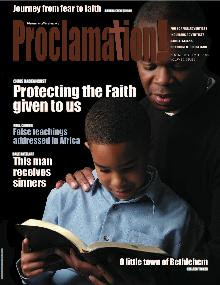
Proclamation magazine1) Paul Carden, "False teachings addressed in Africa" in Proclamation! magazine (November/December 2008). The Executive Director of our parent ministry has an article on African apologetics in the latest issue of Proclamation! Published by former Seventh-day Adventists, this magazine is an incredibly informative resource. I appreciate the opportunity to expose their readers to the challenges facing Christians and others in East Africa.

2) John Arube-Wani, "We musn't forget the Kanungu tragedy" in the New Vision newspaper (Uganda). Here is another editorial piece on the Sserulanda Spiritual Foundation. This researcher is worried that Uganda could be facing another Kanungu. Regardless, more study definitely needs to be done on this group.

3) Massimo Introvigne, "'The Black Jews of Africa': A Review" on the Center for Studies on New Religions web site. I find book reviews to be helpful overviews and quick snapshots of more substantive works. This review was very helpful in opening my eyes toward Black Jews in Africa. Now I'll have to add The Black Jews of Africa to my Amazon wish list!

4) "Theology in Black and White?" on the (Anglican) Church Mission Society web site. This link includes an audio dialogue between an emerging church, postmodern Englishman and a Pentecostal Nigerian. I found their discussion to be fascinating. This is a good MP3 to download and listen to for those interested in African vs. Western Christianity. As one blogger titled this conversation: "Postmodern Doubt and African Certainty."

January 9, 2009

Weekly Round-Up

Since I have been away for a couple of weeks, I'm going to play catch up with a few new articles:

1) Matthew Parris, "As an atheist, I truly believe Africa needs God" in the Times Online (Britain). A fascinating opinion piece with the subtitle "Missionaries, not aid money, are the solution to Africa's biggest problem - the crushing passivity of the people's mindset." I pray that the freeing gospel of Jesus Christ will continue to spread throughout Africa!

2) "A look at the church in Uganda in 2008" in the Sunday Vision newspaper (Uganda). Here is a brief report on the good, the bad, and the ugly of Christianity in Uganda. It is a helpful summary of where I will begin serving this year (Lord willing!).

3) Rob Crilly, "Escaping from a cult-like army" in the Irish Times newspaper (Ireland). Don't pass up this opportunity to read the account of a high-ranking leader in the Lord's Resistance Army (LRA). The LRA continues to wreak havoc in Uganda, Sudan, and Congo. May God bring an end to this horrible situation soon!

December 10, 2008

Book Notice: African Christianity - Its Public Role

Paul Gifford, African Christianity: Its Public Role. Bloomington, IN: Indiana University Press, 1998; 368 pp.

African Christianity - Its Public RoleAmericans are used to hearing about the separation of church and state. Religion is said to belong in the private sphere, while politics is in the public domain. But what of Africa, where Christianity is rapidly growing and this public/private distinction is not recognized? Paul Gifford provides a survey of the socio-political influence of Christianity in Africa, where the church has had a foundational place in the building and development of many countries. Especially relevant to ACFAR is the chapter on Uganda, which gives special attention to controversial charismatic movements like Robert Kayanja’s Miracle Centre, Simeon Kayiwa’s Namirembe Christian Fellowship, Handel Leslie’s Abundant Life Faith Centre, and Samuel Kakande’s Holy Church of Christ (now Synagogue Church of All Nations).

From the back cover:
“This is by far the most informative book about contemporary African Christianity around; nobody could have written a study as richly detailed and as informed by real insider knowledge as he has done.... It will be the most significant study of African Christianity to appear at a time when its importance for Africa is becoming ever more widely recognized.” —J. D. Y. Peel

“A sophisticated political and social analysis of the various Christian groups is allied to a most original, consistent exploration of their different theological positions and thinking.... An interesting, important critical assessment of the extent to which the churches are playing a major role in the emergence of a civil society.... Gifford’s overall analysis and his four case studies are so fresh and so important that ... they cry out for immediate publication.” —Richard Gray

Paul Gifford analyzes African Christianity in the mid-1990s, against the background of the continent’s current social, economic, and political circumstances. Gifford employs concepts taken from political economy to shed light on the current dynamics of African churches and churchgoers and assesses their different contributions to political developments since 1989. He also evaluates the churches’ role in promoting a civil society in Africa. Four case studies—Ghana, Uganda, Zambia, and Cameroon—cover all strands of Christianity: Catholic, Evangelical, mainline Protestant, Pentecostal, and Independent. These detailed analyses of the state of the churches in each country also suggest more general patterns operating widely across sub-Saharan Africa.

Paul Gifford is Lecturer in African Christianity at the School of Oriental and African Studies, University of London. His previous books include Christianity and Politics in Doe’s Liberia and The Christian Churches and the Democratisation of Africa.

Table of Contents:
Preface, iii
The Context: Africa Now, 1
African Churches: Their Global Context, 21
Ghana, 57
Uganda, 112
Zambia, 181
Cameroon, 246
Conclusion, 306
Select Bibliography, 349
Index, 363

November 21, 2008

Weekly Round-Up: Witchcraft, Street Preachers, Islamic Conflict, and New Conference Audio

Here's this week's round-up:

1) Joachim Buwembo, "Ugandans losing their heads to a new generation of witchdoctors" in the East African newspaper (Kenya). Witchcraft is a very serious reality in Uganda and East Africa. I have written about this ever-present challenge before, but Buwembo reminds us of the fear, suffering, and even death which Africans struggle with constantly. I pray that the gospel will overcome this darkness!

2) Claire Nabwire, "Street preachers" in the Sunday Monitor newspaper (Uganda). Here is an interesting news story on street preachers in Uganda.

3) Madinah Tebajjukira, "Rebels Muslims seek own mufti" in the New Vision; Ssemujju Ibrahim Nganda, "Mubajje now an imposed Mufti" in the Weekly Observer; and Paul Amoru, "The troubled cleric" in the Daily Monitor newspapers (Uganda). Mufti Sheikh Shaban Ramadhan Mubajje may have begun as a popular Muslim leader in Uganda, but his going to trial for fraud has created many problems for the Islamic community. While he was acquitted of the charges against him, many Muslims still believe that he is guilty. These reports help explain the challenges Mufti Mubajje continues to face.

4) "Karis Theology Weekend Audio Now Up" on the Karis Blog. A few weeks ago I mentioned an upcoming conference with (now Evangelical Theological Society President!) Bruce Ware. This week the church sponsoring the conference has posted the audio, including a discussion on Jesus and salvation. You'll want to download and listen to these MP3s!

November 10, 2008

Tabletalk Magazine on Africa

For many years, I have appreciated Tabletalk magazine. A monthly topical study and Bible devotional combined into one, Tabletalk is published by Ligonier Ministries and covers everything from theological doctrine to church history. Each month readers are treated to edifying material which supports and builds their relationship to Christ.

Tabletalk MagazineNovember's issue is no exception--it is devoted to missions and the global body of Christ. Dr. Peter Hammond, the missionary director of Frontline Fellowship, provides an insightful article on the church in Africa. I was both challenged and encouraged by what he wrote.

Hammond begins by recounting the tremendous amount of persecution that followers of Christ face throughout much of Africa. From Nigeria and Sudan to Angola and Mozambique, believers suffer for their faith. Nevertheless, there is a growing revival amidst the persecution. Thousands of Muslims are regularly reported to convert to Christianity. Our faith is expanding into difficult and oppressive regions including Marxist territories. Praise God for His grace in Africa!

At the same time, Hammond points out a looming danger in the midst of all this growth:
The greatest spiritual needs in Africa at this time are good Bible-based discipleship books, CDs and manuals, and leadership training -- particularly Bible teaching. All of these could be made available for Bible College libraries throughout Africa....

Most pastors in Africa have no formal Bible training. Most pastors have no access to a library, and most own only a few books. Many do not even own a full Bible. Operation World reports that one hundred million Christians in Africa do not even possess a copy of the Bible.

Numerous leaders have gone on record as saying that Africa's greatest need is discipleship. As one pastor put it: "The church has done a good job of evangelizing, but a poor job of discipling. Christianity here is a mile wide and an inch deep!"
I thank God for fellow missionaries who are helping to equip believers in Africa learn God's Word. Nevertheless, I am once again reminded of the great need for biblical discernment and the defense of the faith in Uganda and East Africa. The body of Christ is simply not adequately equipped to counter the errors of cults and other false teachers. Imagine trying to refute a Jehovah's Witness without a full Bible or any other critical information.

The task before us is great, but God's glory shines brightly through meeting these challenges! Lord willing, he will use ACFAR to further build His kingdom early next year.

November 7, 2008

Weekly Round-Up: Ugandan Evangelicalism, Kenyan Challenges, Ghanaian Jehovah's Witnesses, and Defending Exclusivism

Here's this week's round-up:

1) "Evangelists on the rise in Uganda" on France 24. You simply must watch this video on the growth of evangelicalism in Uganda. While the reporters obviously do not have a firm grasp on contemporary Protestantism, evangelicalism, and the charismatic movement in Africa, they still have produced an eye-opening inside look into Uganda's religious atmosphere.

2) "Churches up in arms over shady pastors" in the Saturday Nation newspaper (Kenya). Because of all the prosperity gospel preachers and other charlatans taking advantage of Christians in East Africa, more and more church leaders are calling for additional oversight and regulation by the government.

3) Francis Asamoah-Tufuor, "Jehovah's Witnesses Do Vote In Ghana" in the Ghanaian Times newspaper (Ghana). This news story is fascinating. JWs usually do not vote or get involved in politics, but the JWs in Ghana plan on being a part of their country's political process.

4) Adam Sparks, "Salvation History, Chronology, and Crisis: A Problem with Inclusivist Theology of Religions, Part 1 of 2" in Themelios Journal (in PDF format). When thinking about missions and those belonging to other religions, one of the most debated questions today is on the salvation of non-Christians. Could people be saved by Jesus' sacrificial death on the cross without ever hearing the gospel or believing in Him? Followers of Christ must firmly answer "No," since God has revealed that faith in Christ is our only hope of salvation. Sparks helps us to better understand the exclusivity of our Savior's gospel.