Showing posts with label Movement for the Restoration of the Ten Commandments of God. Show all posts

March 17, 2012

“Kibwetere is Uganda’s most wanted man”

The New Vision newspaper of Kampala has published an article commemorating the 12th anniversary of the massacre of hundreds by the Movement for the Restoration of the Ten Commandments of God. Its unnamed reporter reviews many of the known facts about the cult and includes a helpful list of factors that enabled its leaders to ensnare and control their followers, including:

• They separated families, including children, and took them to different camps in a new environment where they would not socialise easily.

• They erected fences around their camps that were opaque enough to prevent those outside from seeing what was happening inside.

• Producing children and having sex among followers—even between spouses—were strictly forbidden.
• They relied on deception through selective readings of the Bible. The Bible was usually read out of context.

• Apart from the leaders, other members of the cult were not allowed to talk. They used signs to communicate among themselves and to their cult leaders.

• They had a tight day's schedule that kept the followers extremely busy so that there was virtually no time to discuss, not even in signs.

• They tried to keep within the law and be close, very friendly and generous to the authorities, which helped them to avoid any suspicions from the state.

• They usually travelled at night so they could not easily be noticed even by neighbours.

• They did not own their own transport/vehicles. They usually hired vehicles to travel, they were therefore not easy to identify.

• They used to command all followers to sell all their property and bring all the proceeds to the cult leaders, sometimes burning it under the pretext that the Virgin Mary was annoyed with the owners.

• They created a property-less and helpless society of followers who became totally dependent on the cult and had nothing to fall back on.


Other news reports marking the anniversary:

• “Kanungu massacre: 12 years on, memories still fresh” (New Vision)

• “No arrests yet since Kanungu massacre (New Vision)


March 14, 2012

A CALL FOR A NATIONAL DAY OF REFLECTION


MEDIA RELEASE


A CALL FOR A NATIONAL DAY OF REFLECTION
ON THE 12TH ANNIVERSARY OF THE
KANUNGU TRAGEDY


On March 17, 2000 the world was stunned to learn that Uganda was the scene of an unspeakable tragedy: hundreds of men, women, and children cruelly trapped within a church in Kanungu and burned alive. In the days that followed, hundreds more bodies were discovered at four locations—evidence of callous crimes by religious pretenders who still remain at large. As the Bible tells us, “There is a way which seems right to a man, but its end is the way of death” (Proverbs 14:12).

Sadly, the danger has not passed. Spiritual charlatans and counterfeiters, masquerading as men and women of God, still stalk the unwary in every district, and from among every social class. They inflict various degrees of harm and exploit those who trust them as guides to happiness and healing.

The Africa Centre for Apologetics Research, an anti-cult NGO registered in Uganda, calls on Christians across Uganda to make Saturday, March 17 a day of reflection. We encourage all who exercise pastoral and teaching roles in the churches to follow the example of the apostles, warning and discipling their flocks so that they can confidently “Test everything. Hold fast to what is good. [and] Abstain from every kind of evil” (1 Thessalonians 5:21–22). Likewise, we urge parents to diligently teach their children to practice proper biblical discernment in relation to all spiritual claims. And we respectfully request that the authorities press on in their efforts to bring the mass killers of Kanungu to justice.


Rodgers Atwebembeire, ACFAR Coordinator
and Robby Muhumuza, ACFAR Board Chairman
P O Box 72405
Clocktower, Kampala, UGANDA
Office: +256713 000 664
Email: info@acfar.org
Web site: www.acfar.org

March 7, 2012

The Definitive Work on the Kanungu Tragedy?

As the March 17th anniversary of the Kanungu cult massacre approaches, readers seeking an authoritative analysis of the Movement for the Restoration of the Ten Commandments of God should consult Ghosts of Kanungu: Fertility, Secrecy, and Exchange in the Great Lakes of East Africa by Richard Vokes.

The author
is a Senior Lecturer in Anthropology at the University of Canterbury, New Zealand, and a Research Associate of the Institute of Social and Cultural Anthropology at the University of Oxford, UK. Adding to the weight of his research is his fluency in Runyankore/Rukiga, which enabled him to personally interview many key individuals in and around Kanungu.

Vokes also maintains an extensive multi-media web site of cult-related findings.

(Note: The edition of Vokes’s book produced by Fountain Publishers of Uganda is far less expensive than that generally available in North America.)

March 16, 2011

Still No Justice for Kanungu Killers

Uganda awaits the capture and trial of those suspected of murdering hundreds through the Movement for the Restoration of the Ten Commandments of God in March of 2000.

According to a report in the New Vision newspaper, “arrest warrants for [cult leaders] Kibwetere and Mwerinde still stand.”

Audio lectures on the Kanungu massacre by Drs. Chris Tuhirirwe and Paddy Musana, both renowned experts on the cult, can be heard on ACFAR’s iTunes page.

UPDATE: On March 20th the Sunday Vision newspaper published “I Almost Joined Kibwetere’s Cult,” a detailed interview with former MRTCG follower Elias Rutebuuka about his five-month involvement with the deadly Kanungu sect.

March 17, 2010

In the news: Kanungu, ten years later

Uganda’s largest daily newspaper, The New Vision, has published four articles on the tenth anniversary of the tragedy sparked by the Movement for the Restoration of the Ten Commandments of God:I survived Kanungu fire by a whisker,” “Kibwetere’s daughter speaks out on the cult,” “Kibwetere land still unclaimed,” and “Ten years after Kanungu inferno.” The cult’s ringleaders have not been apprehended, and a promised government inquiry has yet to begin.

February 5, 2010

ACFAR Announces Its First Major Conference

Mark your calendar now for The Bible and the Challenge of Discernment (1 Thessalonians 5:21–22), a national conference for pastors and Christian leaders to be held on the campus of Makerere University in Kampala, Uganda on March 15–17. The event is being held to coincide with the 10th anniversary of the Kanungu Tragedy.

Noted speakers include:

Dr. J. Kwabena Asamoah-Gyadu (Trinity Theological Seminary, Ghana)

Robert M. Bowman, Jr. (Institute for Religious Research, USA)

Eric Pement (Centers for Apologetics Research, USA)

Robby Muhumuza (Leadershipwise Africa, Uganda)

Among the topics to be addressed are the Christian’s call to discernment and defending the faith; the integrity and authority of Scripture; the Word-Faith movement; indigenous cults and sects; the Branham movement; Jehovah’s Witnesses; Mormonism; and the challenge of child sacrifice.

The conference is being jointly sponsored by ACFAR and the Kampala Evangelical School of Theology (KEST).

We truly covet your prayers as we prepare for this event!

Space is limited! For registration and additional information, visit the conference web page.

November 23, 2009

An important update from ACFAR coordinator Rodgers Atwebembeire

What a timely and timeless blessing ACFAR is to the malnourished church in East Africa! There could be no better moment than this for such assistance.

As floods of western relativistic tendencies and postmodern idealism sweep the region, the church finds itself ill-equipped to sustain its relevance in an unpredictable, constantly changing society.

The most subtle and venomous enemy of the church is the invasion of cults—pseudo-Christian and aberrant groups, both foreign and traditional—now arising to challenge orthodox beliefs. Syncretism, unsound theological trends, widespread ignorance of God’s Word, a lack of discernment, social benefits promised by the cults, the unpreparedness of pastors, and other factors heighten the predicament in which the church finds itself.

The African church needs to stand in defense of the Gospel. It must emphasize both formative education and corrective discipline. It must seek to win cultists to the truth rather than simply brand them as its enemies. And it must teach the absolute truth of God’s Word, defending it from misinterpretations and corrupting influences. This will require biblically informed leaders, theologically knowledgeable men and those passionate for the defense and preservation of the Christian faith.

In partnership with Kampala School of Evangelical Theology (KEST), ACFAR is organizing training conferences for the week of March 14–20, 2010. The timing coincides with the tenth anniversary of the doomsday cult tragedy in Kanungu which left nearly a thousand people dead. We hope to gather about 400 pastors and church leaders from all over Uganda. Themes will include the authority and reliability of the Bible, practical apologetics and evangelism, resisting the “prosperity gospel,” and the challenge of cults and child sacrifice in Uganda.

Will you commit to praying with us from now until the conferences? We realize that in planning these training events we are about to enter a season of spiritual warfare, and every prayer, every petition, from the saints of God matters greatly!


Become a fan of ACFAR on Facebook

March 28, 2009

Weekly Round-Up

Here's the latest for this week's round-up:

1) Michael Mubangizi, "Fire in the name of God" and "Cult leaders were caught having sex, which was forbidden" in the Weekly Observer newspaper, and "Kanungu massacre: Why govt must rein in cults" in the New Vision newspaper (both papers come from Uganda). I wrote of the anniversary of the Kanungu tragedy last week, but newspapers are continuing to report on the this tragic end to the Movement for the Restoration of the Ten Commandments of God. These are three more informative articles.

2) Josephine Maseruka, "Born-again churches reject federation" in the New Vision newspaper (Uganda). Here we see some courageous Ugandan pastors standing up against false teaching in the formation of a new "born again" united federation. Unity must never come at the expense of truth!

3) David Gibson, "Is One Man's Faith Another's Superstition?" in the Wall Street Journal newspaper. This one is an opinion piece reflecting on Pope Benedict's time in Angola. Yet again we see the danger of witchcraft and syncretism in Africa.

4) "The New Apostolic Church of East Africa soon to become independent" in the New Apostolic Church International News. The success in Africa of the New Apostolic Church, a Swiss-based cult, has been so dramatic that they are restructuring. Chief Apostle Wilhelm Leber, the international church leader, will be conducting a service in Kampala, Uganda today.

March 16, 2009

Remembering the "African Jonestown"

“There is a way that seems right to a man, but in the end it leads to death.” (Proverbs 14:12)

Can cults be dangerous?

You won’t have to convince Ugandans. Their recent history is enough to persuade them of the serious harm cults can bring.

Nine years ago this week, on March 17, 2000, a tragedy took place that has come to be known as the Kanungu Massacre—or the “African Jonestown.” Hundreds of men, women, and children perished in a southern Uganda town after being locked into a church building which was then set ablaze. The media called it a “mass suicide,” but the facts point to something quite different.
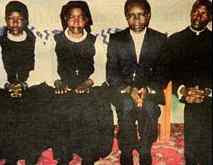
MRTCG LeadersSwiss scholar Jean-François Mayer explains that the group first “emerged around [Roman Catholic] visionaries who shared their messages and were able to attract a following which even included a few priests.” Credonia Mwerinde and other local visionaries reported that the Virgin Mary told them the end of the world was fast approaching and that only those who had properly purified themselves would be prepared for Christ’s return. Joseph Kibweteere joined Mwerinde and other Catholics in spreading this end-time message, and in 1989 the two and several others founded the Movement for the Restoration of the Ten Commandments of God (MRTCG).

The MRTCG grew as its doomsday message found a ready audience. Most scholars agree that political instability, corrupt Catholic leadership, and an AIDS epidemic led many Ugandans to believe in the need for moral renewal in the midst of global collapse. The cult eventually located its headquarters in what is now the Kanungu district, where Mwerinde’s father gave them a large area of land before he died.

Those who joined were required to surrender all of their earthly possessions and live a strict lifestyle of devotion to God. By submitting to the absolute leadership of Kibweteere, Mwerinde, and others they would escape the wrath to come. Sex was forbidden among married couples, and their children were moved to live elsewhere. At times, even speaking was forbidden. Living in the highly controlled compound separated them from the rest of society and made them dependent on the group.

The MRTCG leadership predicted that Jesus would return by the year 2000; questions and disaffection arose when January arrived and the prophecy failed. Leaders quickly set March 17th as the new date. Unknown to their followers, Kibweteere, Mwerinde, and their accomplices started planning the end of their movement before it could unravel completely. Much of the group’s property and livestock was sold off for next to nothing. A communal feast was held on March 15. And one leader was spotted purchasing sulfuric acid, which would intensify a fire.

KanunguAt the appointed hour the faithful gathered in the church to welcome their day of deliverance, perhaps not noticing that the doors and windows had been boarded up. In the midst of their singing and prayers, a loud explosion was heard, and fire ripped through the church.

Escape was impossible. No one survived.

In the days that followed, Uganda police investigating MRTCG properties discovered hundreds more of the cult’s victims in mass burial sites at four locations across the country. The death toll from the cult continued to rise until excavations were called off. The final official number of those dead reached 770, though other estimates range as high as 900 to 1,000, and the actual count will likely never be known. The cult’s leaders have never been apprehended.

Nine years ago, Uganda experienced an unspeakable tragedy at the hands of a cult. Since then, Christian leaders have demanded accountability and sought to raise awareness of the dangers such groups pose to the church and society, even as cults multiply and the government entertains proposals to impose tighter restrictions on all religious organizations. We have been asked to help the Body of Christ in Uganda to warn and train believers so they can recognize and resist deception—in hopes that many can be spared not only the devastation that cults can cause in this life, but the infinitely greater loss of eternal separation from God in the next.

Please pray with us that soon we can establish ACFAR in Kampala to equip African Christians for the vital task of discernment, defending the faith, and cult evangelism.

December 3, 2008

Viral Video: The Doomsday Cult - Uganda

For this month's viral video, I want to direct you to an important documentary on the Movement for the Restoration of the Ten Commandments of God and the resulting Kanungu Massacre. If you want to see the severe challenge of cults in East Africa firsthand, then be sure to watch this twenty minute video.

While I would normally include the video in my post, for some reason the distributor has disabled the embedding feature (why would anyone not allow this option?). Regardless, you can follow the link below to view the documentary.

November 12, 2008

Book Notice: Ashes of Faith

Robert Bwire, Ashes of Faith: A Doomsday Cult's Orchestration of Mass Murder in Africa (Amsterdam: Frontier Publishing, 2007), 166 pp.

Ashes of FaithOther than the Lord’s Resistance Army (LRA), the best-known Ugandan cult is certainly the Movement for the Restoration of the Ten Commandments of God. Eight years ago, this Roman Catholic sect ended violently with the murders of roughly a thousand members. The Kanungu Massacre, as it has come to be known, has left many people around the world searching for answers. Robert Bwire, a Ugandan epidemiologist in the greater New York City area, spent time with followers of this cult while working in his home country. Ashes of Faith is one of only a handful of investigative works attempting to reveal what really took place in Kanungu. Bwire also describes other contemporary prophetic movements, including the “Covenant Box Descended into Uganda,” World Message Last Warning Church (Wilson Bushara), and Holy Spirit Movement (Alice Lakwena).

From the back cover:
The "Movement for the Restoration of the Ten Commandments of God", a Ugandan millenarian cult proclaimed the end of the world on December 31, 1999. The cult claimed that Virgin Mary had delivered this message directly to its three leaders: a half-insane failed politician, a defrocked Catholic priest and a former prostitute. When the world failed to end, the disillusioned faithful demanded a refund of property and money generously donated to the cult leadership.

Unable to quell the rising tide of unrest, the cult leaders conceived a macabre plan of permanently stifling dissenting voices. On March 17, 2000, the cult led its unsuspecting followers through a baptism of fire. Over 550 men, women and children perished in a fire as they waited for their salvation from a sinful world. Subsequent investigations uncovered a series of mass graves, bringing the total killed to over one thousand — the largest linked to a doomsday cult in recent human history.

"Ashes of faith" investigates the background of this bizarre millenarian cult and also provides a rare glimpse into the darker world of extreme religious fanaticism in Africa.

Table of Contents:
Acknowledgments, 9
In the Thrall of Christianity, 11
Apparition Mania, 25
Cult Trinity, 39
The Seer and the Rock, 55
The Ten Commandments, 69
Seeking Thy Kingdom, 91
The Faithful, 107
Last Supper—A Reconstruction, 119
Looking the Other Way, 133
Inferno Aftermath, 143
Conclusion, 157
Notes, 159

October 8, 2008

Book Notice: The Uganda Cult Tragedy

Bernard Atuhaire, The Uganda Cult Tragedy: A Private Investigation (London: Janus Publishing Company, 2003), 138 pp.

The Uganda Cult TragedyThe Movement for the Restoration of the Ten Commandments of God was a cult born in Uganda which ended in tragedy. The lives of roughly a thousand members, including many women and children, ended eight years ago in what is now known as the Kanungu Massacre. To understand how and why this Roman Catholic sect ended so violently, Ugandan scholar Bernard Atuhaire traveled to Kanungu to personally investigate the movement.

From the back cover:
On 17 March 2000, over 500 people died in the blazing inferno in the remote hills of southwest Uganda. Shortly afterwards, hundreds more bodies were discovered in mass graves across the country.

Those who died belonged to a religious cult, the Movement for the Restoration of the Ten Commandments, who believed that only those who committed themselves totally to the sect’s revival of the Ten Commandments would be saved on the day of reckoning—which was close at hand.

The Uganda Cult Tragedy is an account of the formation and growth of this cult, in particular examining the reasons why it rooted itself so firmly in Uganda, passing unnoticed by the authorities until it was too late...

The author believes the cult phenomenon is not only highly dangerous but is now universal and growing. He has researched his subject thoroughly with former cult members in the hope that this revealing account of the terrible, but not widely publicized, tragedy in Uganda may act as a warning—to prevent such appalling loss of life in the future.

Table of Contents:
Introduction, x
The Beginnings, 1
Recruitment, 27
Entry and Training, 33
The Centres: Practices and Daily Life, 47
Opposition, Indifference and Support, 65
The End?, 81
Reflections and Conclusions, 99
Appendices, 103

September 10, 2008

Book Notice: The Kanungu Cult-Saga

S. Kabazzi-Kisirinya, Nkurunziza R.K. Deusdedit, and Banura Gerard, eds., The Kanungu Cult-Saga: Suicide, Murder or Salvation? (Kisubi, Uganda: Marianum Press, 2000), 112 pp.

The Kanungu Cult-SagaThe Kanungu Massacre has been permanently etched into the history and culture of Uganda since it tragically took place eight years ago. The Movement for the Restoration of the Ten Commandments of God was a breakaway cult from the Roman Catholic Church which ultimately ended the lives of hundreds of men, women, and children. Why did it happen? This obvious but difficult to answer question has been ringing in the minds of many people through the years. To come to a better understanding of this tragic movement, a number of scholars came together at Makerere University in Kampala, Uganda to present their research and analysis. Their resulting papers have been collected and combined into this essential resource.

From the back cover:
The Kanungu mystery fire in which hundreds of followers of the Movement for the Restoration of the ten commandments perished is and will remain a dark chapter in the history of Uganda. As many questions are being raised, researchers from Makerere University have attempted to provide clues to possible answers. Crucial among them are the following: Firstly, was it a case of mass suicide or murder?

Secondly, what role did religion and religious belief play in the tragedy? Finally, what are the wider implications for Uganda and indeed the whole society at large? it is hoped that insights in these questions will inspire other researchers to elucidate further the mystery of Kanungu.

Table of Contents:
S. Kabazzi-Kisirinya, Foreword, 7
Deusdedit R.K. Nkurunziza, Introduction, 9
Gerard Banura, Chris Tuhirirwe, and Joseph Begumanya, Kanungu Research Team's Report, 12
Gerard Banura, A Critical Evaluation of the Kanungu Tragedy, 47
A.B.J. Byaruhanga-Akiiki, Religion, Cults, and Sects: Towards a Comprehensive Understanding of Terms, 56
Paddy Musana, New Religious Movements in Uganda: Characteristics and Roots, 67
Sylvia Tamale, Cults and Sects in Uganda: The Good, the Bad, and the Ugly, 80
Sources, 87
Appendices, 90
Publisher contact:
Marianum Press
Marianumpltd@utlonline.co.ug

March 14, 2008

Weekly Round-Up: Piper on the Gospel, The Family, Missions Metaphors, and the Kanungu Massacre

Here's this week's round-up:

1) John Piper, "How I Distinguish Between the Gospel and False Gospels" from the Text and Context 2008 Resurgence Conference. John Piper is always worth listening to, but I especially appreciate his unfolding of Scripture when treating the need for discernment. You can watch the video or listen to the audio at the Resurgence site, or you can check out Piper's outline through the Desiring God site. Either way, this message is definitely worth your time.

2) Juliana Buhring, "Our dad lied about us" in the Sunday Vision newspaper (Uganda). This is a continuation of the controversy brewing in Uganda on The Family cult. A former member and daughter of a leader of the Family in Uganda responds to what her father had previously told the paper. Her rebuttals are very informative.

3) David Sills, "Missions Metaphors" on the Culturality and Missiology blog. Sills is a veteran missionary that always brings much insight to international missions. In this post, he warns of ministry that does not continue after the conversions of believers to build mature churches and strong Christians. As he points out:

What of the work in Europe, Sub-Saharan Africa, Latin America, the South Seas, or the United States? We reached many of those places years ago. Many strong buildings were built, but we had other work elsewhere that beckoned. When I hear of buildings that missionaries of yesteryear left behind being torn down, I wonder about the spiritual and kingdom work they left behind. Is it strong? Or, like Europe, have forces of fallen nature rendered it rotten and falling in on itself? Every Christian population is only one generation away from heresy or general apostasy. We must dedicate ourselves to the task of reaching and teaching. Reaching the unreached is great, but the Great Commission is not merely about reaching; Jesus also said we were to be "teaching them to observe everything I have commanded you."
Make sure to read the entire article.

4) "Movement for the Restoration of the Ten Commandments of God" on Wikipedia, and Gerald Businge, "Seven Years Since the Kanungu Massacre: Are we any wiser?" in the UGPulse (Uganda). Next week marks the eighth anniversary of the Kanungu Massacre. On March 17th, 2000, more than 500 people had burnt to death in a church in the Kanungu district of Uganda. They were members of the Movement for the Restoration of the Ten Commandments, a religious cult. May we all learn from this horrible tragedy.