Showing posts with label African Traditional Religions. Show all posts

April 28, 2010

A Major New Survey on Religion in Africa

The Pew Forum on Religion & Public Life has released the results of an important survey, Tolerance and Tension: Islam and Christianity in Sub-Saharan Africa. The executive summary notes that “sub-Saharan Africa is clearly among the most religious places in the world. In many countries across the continent, roughly nine-in-ten people or more say religion is very important in their lives. By this key measure, even the least religiously inclined nations in the region score higher than the United States, which is among the most religious of the advanced industrial countries.”

Of special interest is the finding that “Despite the dominance of Christianity and Islam, traditional African religious beliefs and practices have not disappeared. Rather, they coexist with Islam and Christianity. Whether or not this entails some theological tension, it is a reality in people's lives:
Large numbers of Africans actively participate in Christianity or Islam yet also believe in witchcraft, evil spirits, sacrifices to ancestors, traditional religious healers, reincarnation and other elements of traditional African religions.

The report also explains that “in every country surveyed that has a substantial Christian population, at least half of Christians expect that Jesus will return to earth during their lifetime. And in every country surveyed that has a substantial Muslim population, roughly 30% or more of Muslims expect to personally witness the re-establishment of the caliphate, the golden age of Islamic rule that followed the death of Muhammad.”

Significantly, “
By their own reckoning, neither Christians nor Muslims in the region know very much about each other’s faith. In most countries, fewer than half of Christians say they know either some or a great deal about Islam, and fewer than half of Muslims say they know either some or a great deal about Christianity. Moreover, people in most countries surveyed, especially Christians, tend to view the two faiths as very different rather than as having a lot in common.”

Major newspapers in Uganda, Kenya, Tanzania, and other countries provided local insights on the survey, which involved “more than 25,000 face-to-face interviews in more than 60 languages or dialects in 19 countries, representing 75% of the total population of sub-Saharan Africa.”

You can download the full report here.

February 5, 2010

ACFAR Announces Its First Major Conference

Mark your calendar now for The Bible and the Challenge of Discernment (1 Thessalonians 5:21–22), a national conference for pastors and Christian leaders to be held on the campus of Makerere University in Kampala, Uganda on March 15–17. The event is being held to coincide with the 10th anniversary of the Kanungu Tragedy.

Noted speakers include:

Dr. J. Kwabena Asamoah-Gyadu (Trinity Theological Seminary, Ghana)

Robert M. Bowman, Jr. (Institute for Religious Research, USA)

Eric Pement (Centers for Apologetics Research, USA)

Robby Muhumuza (Leadershipwise Africa, Uganda)

Among the topics to be addressed are the Christian’s call to discernment and defending the faith; the integrity and authority of Scripture; the Word-Faith movement; indigenous cults and sects; the Branham movement; Jehovah’s Witnesses; Mormonism; and the challenge of child sacrifice.

The conference is being jointly sponsored by ACFAR and the Kampala Evangelical School of Theology (KEST).

We truly covet your prayers as we prepare for this event!

Space is limited! For registration and additional information, visit the conference web page.

May 20, 2009

Book Review: Foundations of African Traditional Religion and Worldview

Since African Apologetics has picked up a large number of new visitors and subscribers, for the next couple of Wednesdays we will be re-running some of John's important book reviews.

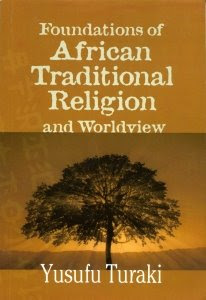
Foundations of African Traditional Religion and Worldview
Yusufu Turaki, Foundations of African Traditional Religion and Worldview (Nairobi, Kenya: WordAlive Publishers, 2006), 128 pp.

There are many different ways that individuals can study African Traditional Religion (ATR): historical, psychological, sociological, etc. But one approach is often overlooked, the theological. When examined in this manner, many important questions are raised. What is the ATR worldview--its framework for understanding the world in which we live? What are ATR's basic beliefs? How does ATR compare to the Christian faith?

Yusufu Turaki seeks to answer these questions in his book Foundations of African Traditional Religion and Worldview. A Nigerian theologian and scholar, Turaki is certainly qualified to address these essential religious issues. He begins by defining religion and placing ATR within its religious context. Next he turns to explaining its fundamental theological, philosophical, and ethical beliefs. After laying this groundwork, the author continues to examine ATR's beliefs regarding the Supreme Being as well as the gods and spirits. Then he looks at how humans interact with the spirit world, from communication to the acquisition and use of power. Finally, he analyzes what it means to be human and the meaning of life according to ATR.

I learned a great deal from Turaki's book. To begin with, I appreciate his approach--laying out the fundamentals of ATR as a whole while showing how these foundational beliefs relate to each other. Understanding ATR as a worldview has been tremendously informative. I am amazed that he was able to include so much in such a few pages! This work will definitely be a convenient reference.

At the same time, I also find this book's brevity to be a limitation. When reading it, I regularly found myself wanting to dig deeper and learn more. At times, I almost felt as if I was reading through a beefed-up outline. While this may have been the author's intent, his book would be more useful with additional expansion and analysis.

Turaki also seems somewhat overly dependent on the work of Philip M. Steyne. He admits his dependence in the first chapter, but his citations and quotations from Steyne were so frequent that I occasionally wondered if I should simply read Steyne instead.

In any case, I'd still suggest that those interested in an introduction to ATR should read Turaki's book. It is a helpful starting point to further study. I hope that more theologians, philosophers, missionaries, and others will build off of the foundations of a work like this to further equip the body of Christ.

April 8, 2009

Yusufu Turaki on Western and African Worldviews

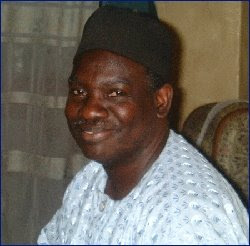
Yusufu TurakiSince no one submitted a question for Ask Anything Wednesday, I thought it would be a good opportunity to point out an important article analyzing Western and African worldviews. "Sharing the Burden of Defending the Gospel" was written by Yusufu Turaki, a Nigerian theologian at Jos Theological Seminary. Turaki's paper is essential reading to understand African Christianity today, especially as it so often mixes with traditional beliefs and practices or leads to cultic groups. Here is the introduction to whet your appetite:
"This paper is divided into two major parts: (1) the first examines modern Western worldviews, philosophies and religions; and (2) the second part analyzes traditional African worldviews and religious beliefs, syncretism, and religious cults.

"In the first part of the paper, I will consider the socio-political context and the environment which gave rise to both the modern philosophies and religions that are opposed to Christianity. In the second section of the paper, in which I analyze traditional African worldviews and religious beliefs and practices, a major focus will be on the ways in which African Christians often lapse into syncretism and religious cults in the expressions of their Christianity."

February 28, 2009

Weekly Round-Up

Here's the latest for this week's round-up:

1) Robert Kalumba, "Digging into the juju world" in the Sunday Monitor newspaper (Uganda). I always hesitate to post these stories, but this article is the latest report on the growing popularity of witchdoctors and human sacrifice.

2) Archbishop Henry Luke Orombi, "We must crusade against human sacrifice" in the Weekly Observer newspaper (Uganda). With the increasing attention on witchcraft and human sacrifice in Uganda, church leaders are stepping forward to confront this challenge. This letter was released by Anglican Archbishop Orombi and several other key Christian leaders in the country. May God bless their efforts!

3) Marshall Rabil, "Delicious peace: A story from across the world in Africa" in the Tidewater News newspaper. Here is an account of a recent visit to Uganda where the writer met and stayed with a local member of a Jewish splinter group—the Kulanu: "This is a unique sect of Judaism that began in 1919 by Shimei Kakungula because of his interpretations of the Bible. J.J.’s grandfather was a friend of Shimei’s and converted to Judaism with him, and he and his family remain in the minority in Mbale."

4) Tim Keel, "An Invitation to Amahoro Africa" on the Emergent Village Weblog. The Emergent movement in Africa? Yes. While I have pointed out their involvement in Africa before, this blog post is an unfortunate reminder of their goals among our African brothers and sisters in Christ.

February 18, 2009

Book Review: Who are the Living-Dead?

Richard Gehman, Who are the Living-Dead? A Theology of Death, Life After Death and the Living-Dead. Nairobi: Evangel Publishing House, 1999.

Who are the Living-Dead?While preparing to become a missionary in East Africa, I am seeking to better understand the cultural beliefs and worldviews of those living in this region of the world. The latest book I have completed is Who are the Living-Dead? A Theology of Death, Life After Death and the Living-Dead by Richard Gehman. Gehman is an American missionary who served for years with the Africa Inland Mission at Scott Theological College in Kenya. He is also editor of the Africa Journal of Evangelical Theology.

The living-dead may not be much of an issue for Christians and others in North America, but they are very real for many Africans. As an experienced missionary teaching African pastors, Gehman recognized the need to address ancestors, death, and the living-dead biblically. He summarizes his purpose with three goals:

This book has three objectives:
(1) to provide theological and pastoral help for the Christian pastors and church leaders in Africa so that they can teach and strengthen Christians to face sickness and death with courage without returning to African Traditional Religion.
(2) to provide the educated, thinking lay Christian in Africa with an understanding of death according to the Bible so that he can develop a Christian world view and stand strong in his faith.
(3) to help the church in Africa develop a biblical theology of death, life after death and the living-dead so that she will continue to grow strong in the knowledge of the gospel and resist teaching contrary to the truth of the gospel (x).

His book is broken down into five parts. The author begins by explaining and summarizing the African Traditional Religion's beliefs and practices regarding death, life after death and the living-dead. Then he examines how Christians are to relate to God and to our parents, including the tension between the first and the fifth commandments concerning worship and honor. Next, he turns to different solutions Christians have offered to these issues in Africa, assessing their truthfulness in light of Scripture. The rest of his work is devoted to building a biblical understanding of the living-dead, death, and the afterlife.

Overall, Gehman's book is excellent. I found it very informative. He tackles many questions, such as the difference between veneration and worship, whether the living can speak and relate to the dead, and the powers of darkness. His work is theologically rich while remaining clear for the average believer. Additionally, I am grateful to his continual commitment to the centrality of Scripture in his study. He exegetes numerous biblical texts to see how they relate to the important issues under consideration.

One section of this work that really stands out is his consideration of the intermediate state (as well as his appendix on Hades and Sheol). What happens to believers and unbelievers between their deaths and the time when Christ returns? Gehman's treatment is one of the best overviews surrounding this complex question that I have read. Easy to understand and biblically compelling, I am especially thankful for the clarity he brings to this difficult issue.

However, I do have a couple of disagreements. First, Gehman seems to believe that Christians can be demonized (demon possessed). He writes:

Christians who are walking in obedience to God, filled by His Spirit and washed in the blood, have nothing to fear from the powers of darkness, as we shall see. But the Christian who lowers his guard and falls away from God by living in sin, may open himself up to various forms of oppression from the unclean spirits. There are various degrees of demonic control, ranging from milder forms of demonic oppression to a complete spirit possession (170).
While demons are real and can bring severe external oppression upon Christians, a true follower of Christ cannot be demonized. For more information and an excellent refutation of this view, see the article "Can a Christian Be 'Demonized'?" by Brent Grimsley and Elliot Miller in the Summer 2003 issue of the Christian Research Journal.

Second, when dealing with the destiny of the unevangelized, Gehman leaves open the possibility of salvation apart from the gospel. Following Reformers such as Zwingli and others, he says:

General revelation does not offer any hope of salvation. Only by a special revelation from God Himself can anyone understand his own sinful condition, repent of his sin, and turn to the Lord for forgiveness. Normally this comes through preaching the gospel. But there may be some individuals whom God draws to Himself apart from such proclamation, as He did with Job, Melchizedek and others. But this is the exception, not the rule (282).

In his analysis, the author simply does not sufficiently take into account the progression of redemption. We do not live in the era of Job and Melchizedek. Jesus Christ has come, establishing the reality of the new covenant. No hope exists apart from gospel proclamation.

Nevertheless, I cannot stress enough the importance of this book for Africans and missionaries serving our Lord in Africa. The church is indebted to Gehman for his taking the time to provide a theology of death, life after death, and the living-dead. I am sure that this book will continue to be essential reading for years to come.

One last note: this book was published by Evangel Publishing House in Nairobi, Kenya. While their distribution reaches Britain, this book may not be easy to find and purchase. Do not let this challenge deter you—it is well worth the money.

August 1, 2008

Weekly Round-Up: Healers, Seventh-day Adventists, and Religious Competition

Here's this week's round-up:

1) Frank Mugabi and Richard Adrama, "Bishop warns on healers" in New Vision newspaper (Uganda). This article shows the problem of African Christians continuing to use traditional healers, with an Anglican bishop suggesting that they go to doctors for medical help.

2) Jack Nduri, "Seventh Day Adventist now braves evangelical wave" in Eastern Standard newspaper (Kenya). The Seventh-day Adventists (SDA) in East Africa are continuing to be imaginative in their efforts to grow. The last paragraph is sobering: "Under the East Africa Union, the Seventh Day Adventist Church has a population of more than 42,422,000."

3) Harold Ayodo, "Scramble for faithful" in Eastern Standard newspaper (Kenya). Here is an interesting report from Kenya on religious competition where churches are "scrambling for souls."

July 18, 2008

Weekly Round-Up: Judaism in Uganda, Syncretism in Nigeria, New Missions Audio, and Reflections on South Africa

Here's this week's round-up:

1) Daniel Edyegu, "Judaist leader installed in Mbale" in the New Vision newspaper (Uganda). Is Judaism in Africa? Yes. And the first black Rabbi in East Africa will lead about 800 followers in Uganda.

2) Laurie Fortunak, "Dual Allegiance" in Christianity Today (August 2008). Here is a deeply troubling account of a pastor in Nigeria practicing syncretism (or as the article prefers to call it, dual allegiance). According to this report, one former missionary in West Africa said, "One out of 10 self-named Christians in this region practices only Christianity."

3) HBC Missions Conference 2008 Audio. The conference may be over, but you can still listen to these timely and important messages on missions. Be sure to listen to Conrad Mbewe, a pastor in Zambia (of course, this is after you listen to my interview with Isaac Makashinyi from Zambia!).

4) Jonathan Leeman, "4 final thoughts about time in South Africa" on the 9 Marks Blog. Some of the 9 Marks guys were recently in South Africa and have been blogging about there time there. I have really been blessed by their posts, but this wrap up says much about Christianity in Africa today.

March 4, 2008

Book Review: Foundations of African Traditional Religion and Worldview

Foundations of African Traditional Religion and Worldview
Yusufu Turaki, Foundations of African Traditional Religion and Worldview (Nairobi, Kenya: WordAlive Publishers, 2006), 128 pp.

There are many different ways that individuals can study African Traditional Religion (ATR): historical, psychological, sociological, etc. But one approach is often overlooked, the theological. When examined in this manner, many important questions are raised. What is the ATR worldview--its framework for understanding the world in which we live? What are ATR's basic beliefs? How does ATR compare to the Christian faith?

Yusufu Turaki seeks to answer these questions in his book Foundations of African Traditional Religion and Worldview. A Nigerian theologian and scholar, Turaki is certainly qualified to address these essential religious issues. He begins by defining religion and placing ATR within its religious context. Next he turns to explaining its fundamental theological, philosophical, and ethical beliefs. After laying this groundwork, the author continues to examine ATR's beliefs regarding the Supreme Being as well as the gods and spirits. Then he looks at how humans interact with the spirit world, from communication to the acquisition and use of power. Finally, he analyzes what it means to be human and the meaning of life according to ATR.

I learned a great deal from Turaki's book. To begin with, I appreciate his approach--laying out the fundamentals of ATR as a whole while showing how these foundational beliefs relate to each other. Understanding ATR as a worldview has been tremendously informative. I am amazed that he was able to include so much in such a few pages! This work will definitely be a convenient reference.

At the same time, I also find this book's brevity to be a limitation. When reading it, I regularly found myself wanting to dig deeper and learn more. At times, I almost felt as if I was reading through a beefed-up outline. While this may have been the author's intent, his book would be more useful with additional expansion and analysis.

Turaki also seems somewhat overly dependent on the work of Philip M. Steyne. He admits his dependence in the first chapter, but his citations and quotations from Steyne were so frequent that I occasionally wondered if I should simply read Steyne instead.

In any case, I'd still suggest that those interested in an introduction to ATR should read Turaki's book. It is a helpful starting point to further study. I hope that more theologians, philosophers, missionaries, and others will build off of the foundations of a work like this to further equip the body of Christ.