Showing posts with label Mormonism. Show all posts

April 9, 2013

GUEST COLUMN: Racism and Mormonism in Uganda


By Tim Martin
I read with mixed emotions the Observer article “Mormons in media drive” dated 6 March 2013. The article explained that the Mormon Church has created a new web site that “will publish all there is to know about the faith” and help “Ugandan journalists and the general public [to] get credible information” about their religion. 
The article was positive and accurate in its depiction of Mormonism’s moral positions. For instance, the Mormon Church should be commended for its “strong stance against cohabiting, alcoholism, pre-marital sex and homosexuality.”
However, the Mormons’ new site fails to cover some of the important topics that the Observer article said it would address. For instance, the article quotes Sean Donnelly as saying that the site “would throw more light on…controversies like…racism.” But the site’s article on racism sidesteps the main points of this controversy almost entirely.
Concerning racism, the site accurately discusses the 1978 change in Mormon Church policy allowing male church members of African descent to hold its priesthood. It also describes the current state of racial integration in many Mormon congregations. While true, these points beg the question at hand.
The most controversial race issue is that the Mormon Church’s top leaders have repeatedly claimed that dark skin is a curse from God. For instance, revered Mormon Apostle Mark E. Petersen declared: “At least in the cases of the Lamanites [American Indians] and the negroes we have the definite word of the Lord Himself that He placed a dark skin upon them as a curse—as a punishment and as a sign to all others.” (“Race Problems—As They Affect the Church,” an address given at Brigham Young University on August 27, 1954)
Notice that Petersen is not claiming that this is his personal opinion. As an apostle of the Mormon Church, he claimed that this was the “definite word of the Lord Himself.”
The Book of Mormon also supports this teaching. Although “black and white” people are all invited to approach God (2 Nephi 26:33), the fact that some have much darker skin is based on divine curses against their ungodliness. Second Nephi 5:21 explains that the people known as Lamanites received “a sore cursing, because of their iniquity.” What was the nature of the curse? God “cause[d] a skin of blackness to come upon them” so the Lamanites would not “be enticing” to His followers.
(It’s worth noting that on 1 March of this year the Mormon Church announced its new digital edition of the Book of Mormon. While the main text of the book remains the same, the church has strategically altered some of the chapter descriptions. For example, in the 1981 print edition of the Book of Mormon, the chapter description for 2 Nephi 5 says that the “the Lamanites are cursed, receive a skin of blackness, and become a scourge unto the Nephites.” The new version omits the phrase “skin of blackness” and merely says that the Lamanites “are cut off from the presence of the Lord.”)
The same theme is found in another Mormon scripture, the Pearl of Great Price. In the Moses 7:8 the people of Canaan were cursed, “and there was a blackness came upon all the children of Canaan, that they were despised among all people.”
Sadly, the Mormon Church’s apostles and prophets have never apologized for these and many other statements—some of them far worse. (See “The Mormon Church and the African,” published by the Africa Centre for Apologetics Research, for extensive quotations.) Instead, the church diverts attention from the issue by repeated references to the racial harmony one can observe in Mormon congregations since the 1978 “revelation.”
Still, there is another aspect of this issue that the Mormon Church needs to openly admit if it wants to engage in genuine full disclosure. According to the Book of Mormon and Mormon leaders, once a person with dark skin ceases to practice evil and begins following the Lord, his/her skin will transform into lighter shades. In the second chapter of 3 Nephi some of the Lamanites left their tribe and joined with the righteous Nephites. Verse 15 explains: “And their curse was taken from them, and their skin became white like unto the Nephites.
At the church’s General Conference in October of 1960, Mormon Apostle Spencer W. Kimball described his visit to an Indian community in Arizona. The Mormon Church had been making converts there for 15 years and had over 8,400 members. Now that these dark-skinned Indians had been accepting the Mormon gospel, Kimball—who would later become the church’s prophet—could report:

For years they have been growing delightsome, and they are now becoming white and delightsome, as they were promised (2 Ne. 30:6). … The children in the home placement program in Utah are often lighter than their brothers and sisters in the hogans on the reservation….At one meeting a father and mother and their sixteen-year-old daughter were present, the little member girl—sixteen—sitting between the dark father and mother, and it was evident she was several shades lighter than her parents. (Conference Report, October 1960, pp. 32–37; accessed at http://scriptures.byu.edu/gettalk.php?ID=1091&era=yes)

This aspect of Mormon teaching has not been properly addressed. Instead, it is covered up. Though Mormon leaders avoid the topic, its implications still permeate Mormon culture. For example, Mormons often produce large outdoor pageants depicting scenes from the Book of Mormon. Every one of them depicts Lamanites as savages with dark skins and Nephites as more sophisticated people with light skins. If you were to ask any lifelong Mormon why there is a difference in skin color between the Lamanites and Nephites, they know the correct answer.
People in Uganda and other nations where the Mormon Church is attempting to make inroads may never hear the facts about this racist doctrine—at least from the church’s missionaries. •

March 5, 2013

ACFAR Conference on Cults (March 21–23)


REGISTRATIONS ARE NOW OPEN! 

Powerful, scriptural answers to the challenges and claims of…

Mormonismthe Prosperity GospelJehovah’s WitnessesSeventh-day Adventism


March 21–23, 2013 • Africa Renewal Christian College • Buloba, Kampala

Featured speaker: Tim Martin | Watchman Fellowship USA

Registration is 25,000/- for the two and a half days of the conference, plus materials. 


For inquiries, please call The Africa Centre for Apologetics Research at 0706 100 664/0782 000 664.

June 9, 2012

June 9th: Unanswered Questions on an Important Anniversary

On this date in 1978, the Mormon Church stunned the world by announcing that God would finally permit “worthy” African men to be ordained to its priesthood. This “revelation” by Mormon prophet Spencer W. Kimball defused decades of anger and controversy, and opened new doorways of privilege to members whose access to church leadership and secret temple rituals had always been denied. 

It also cleared the way for the Mormon missionaries to seek converts across Africa. On April 13th of this year the New York Times featured an article on the church’s increasing missionary work in Uganda, noting that fully a third of its members here have been converted in just the past year.
But the church’s announcement in 1978 left something completely unchanged by its leaders—men with the same authority as the prophets and apostles in the Bible, who direct “the only true and living Church upon the face of the whole earth.”
For more than a century, Mormon prophets and apostles openly taught that Africans are black because of a divine curse—the dreaded “mark of Cain.” This is not obscure folklore or opinion, but doctrine stated plainly by some of the church’s highest spiritual officers in formal conferences and respected publications.
What have revered Mormon leaders taught about the African race? Space only allows for four examples among many.
In 1859, Mormon prophet Brigham Young identified Africans as the descendents of Cain (Genesis 4), declaring: “Cain slew his brother. Cain might have been killed, and that would have put a termination to that line of human beings. This was not to be, and the Lord put a mark on him, which is the flat nose and black skin. Trace mankind down to after the flood, and then another curse is pronounced upon the same race—that they should be the ‘servant of servants,’ and they will be until that curse is removed….”(Journal of Discourses, Vol. 7, p. 290)
Mormon prophet Joseph Fielding Smith clarified this view in 1931, stating: “Not only was Cain called upon to suffer, but because of his wickedness he became the father of an inferior race. A curse was placed upon him and that curse has been continued through his lineage and must do so while time endures. Millions of souls have come into this world cursed with a black skin and have been denied the privilege of Priesthood and the fullness of the blessings of the Gospel.” He added: “This doctrine did not originate with President Brigham Young but was taught by the Prophet Joseph Smith....we all know it is due to his teachings that the Negro today is barred from the Priesthood.” (The Way to Perfection, pp. 101–102, 110–111)
Mormon apostle Mark E. Petersen asked in 1954, “Who placed the Negroes originally in darkest Africa? Was it some man, or was it God?” His answer: “The Lord segregated the people both as to blood and place of residence. At least in the cases of the Lamanites [i.e., Native Americans] and the negroes we have the definite word of the Lord Himself that He placed a dark skin upon them as a curse—as a punishment and as a sign to all others.” (“Race Problems—as They Affect the Church,” an address given at Brigham Young University)
Mormon apostle Bruce R. McConkie further explained in 1966 that “Cain, Ham, and the whole negro race have been cursed with a black skin, the mark of Cain, so they can be identified as a caste apart, a people with whom the other descendants of Adam should not intermarry.” (Mormon Doctrine, p. 114)
In recent years the Mormon Church has converted famous athletes and entertainers of African descent. In 2009 it elevated a Kenyan to the upper levels of its authority structure.
But on this date we are reminded that the Mormon Church has never renounced or changed its oft-stated doctrine that Africans are black because God Himself has cursed them. The Mormon Church should either publicly embrace its leaders’ racist teachings, or openly renounce them. 
Hoping that we will not notice is not enough.

April 23, 2012

Mormon Missionaries Advance Across Uganda

On April 13, the New York Times published a lengthy article entitled “At Age 19, from Utah to Uganda.” It describes the personal background and proselytizing efforts of a Mormon missionary named Jared Dangerfield and several of his colleagues from the United States and Zimbabwe.

Among the article’s claims:

• “Currently, there are only about 5,000 Mormons in Uganda, less than 1 percent of the population. What is noteworthy, however, is that a third of those were converted last year.
• “The number of missionaries stationed in Uganda has also grown, to 120 from 70 two years ago.”
• “The missionaries say they can net a dozen new contacts from the street in a couple of hours, and visit five homes in a day. They estimate each is responsible for around 40 baptisms by the time service is up.”
• “The [worldwide Mormon] church gained nearly 400,000 members in 2010, about 70 percent of them converted by college-age missionaries like Elder Dangerfield…”

And how do the missionaries promote their strange and controversial faith among the largely Christianized Ugandans?

One example, if true, is troubling: “We are not here to move you to another church…We just want to share,” asserts Elder Dangerfield as he pursues one prospect. This is blatantly deceptive, as Mormonism claims that all other churches are apostate, and the missionaries’ intention is to convert followers of any denomination.


Will Ugandan Christians rise to meet the challenge of the growing Mormon missionary thrust?

February 11, 2010

Mormonism Advances in Uganda

The Mormon Church News has announced the formation of the first LDS “stake” (equivalent to a diocese) in Uganda on January 17. The cult’s first branch in the East African nation was organized in 1991.

Read the complete story here—and pray that the Christians of Uganda will be ready to recognize and respond in love to the missionary efforts of this deeply heretical movement.

May 23, 2009

Weekly Round-Up

Here's the latest for this week's round-up:

1) Dan Harris and Almin Karamehmedovic, "Child Witches: Accused in the Name of Jesus" on the Nightline television program. While witchcraft in Africa is very real, there is a growing danger throughout the continent of Christians accusing children of witchcraft and submitting them to extremely violent exorcisms. You'll want to make thew time to watch and/or read this report.

2) Patrick Jaramogi, "Hindu spiritual leader Swami visits" in the New Vision newspaper (Uganda). When people think about religions in Africa, most will not point to Hinduism. But here we see the status of Hinduism in Uganda, with the Hindu spiritual leader His Holiness Swami Sri Satyamitranand Giriji Maharaj coming for a five-day visit.

3) Jason Swensen, "Full joy found in principles of the gospel" in the Church News. I have previously mentioned Mormonism's first black African general authority. Here is a follow-up piece, covering his background in Africa and history with the LDS church.

May 9, 2009

Weekly Round-Up

Here's the latest for this week's round-up:

1) Paul Fauvet, "Saboteurs Or New Age Fanatics?" on AllAfrica.com and "Mozambique dam was New-Age cleansing ritual - not sabotage" in the Sowetan newspaper (South Africa). In Mozambique, four people belonging to "Orgonise Africa" were arrested as they sought to add "orgon" to the lake. They are a New Age sect which follow the teachings of Austrian psychiatrist Wilhelm Reich.

2) "Expansion for Scientology in South Africa" in Scientology Today. The Church of Scientology recently made a massive purchase in South Africa, the Johannesburg landmark Kyalami Castle. They are continuing to aggressively expand their presence throughout Africa.

3) Latayne C. Scott, "Can't We All Just Get Along?," "Understanding Representational Research," "Agreeing with Spurgeon," "'It's All About the Story'," and "'Can You Un-Cult a Cult?'" on the Koinonia blog. Latayne Scott has been busy, releasing her novel Latter-day Cipher (which I reviewed on this blog) as well as an extensively revised third edition of The Mormon Mirage (which I hope to review soon!). These five posts are on the Zondervan Academic blog, with the series titled "A Former Member Looks at the Mormon Church Today." Be sure to check it out!

April 29, 2009

Book Review: Latter-day Cipher

Latayne C. Scott, Latter-day Cipher. Chicago: Moody Publishers, 2009.

Latter-day CipherWhat happens when you take a fictional suspense-thriller and place it in Utah, the center of Mormonism? Latayne C. Scott gives us an example in her novel Latter-day Cipher. A former Mormon who converted to evangelical Christianity, Scott helps readers understand Mormonism through a murder mystery.

The main character is Selonnah Zee, who winds up in Utah when the murders begin taking place. As a journalist, she is quickly assigned to cover the growing number of deaths which are connected by Mormonism and its history. In reporting on these complex cases, she finds herself embarking on a crash course in Mormonism, from her LDS cousin Roger to her newfound local reporter friend Anne. Can Selonnah wrap her mind around Mormonism enough to solve these crimes? And what will these crimes expose about the Mormon church? You’ll have to read the book to find out.

I admit up front that I don’t read a lot of fiction, so I’m not evaluating the book’s literary merits from a position of strength. I can see reviewers critiquing Scott’s work as being somewhat underdeveloped, with the plot serving primarily as a vehicle for teaching readers about Mormonism. With this in mind, the book may fall short for someone who’s simply looking for a good thriller.

At the same time, I really appreciate Scott in her attempt to creatively educate people about Mormonism. Many Christians and others may never pick up a book summarizing and evaluating LDS teaching. But they would likely be drawn to a contemporary murder mystery novel which is filled with information on Mormonism’s history and beliefs. Consequently, as a teaching tool, I really like her book. I would definitely give it to a Christian friend who enjoys this kind of fictional work. It even has questions for discussion in the back to think through some of the concerns and issues that she raises.

Nevertheless, I should offer a few disclaimers. First, given the nature of the crimes, the storytelling can be graphic and may be inappropriate for some readers. Second, Selonnah’s friend Anne is a Christian who explains the Trinity by using the analogy of three states of water (ice, water, and steam)—a common illustration that’s fundamentally flawed and can lead to a misunderstanding of the nature of God. Third, I don’t think the ending provides sufficient closure to the story. I can only assume that this book is meant to be the first of a series, but I felt like the book just kind of abruptly ended.

In any case, I don’t believe that these caveats should necessarily prevent Christians from reading an entertaining page-turner which will also inform them a great deal about Mormonism. I pray that the Lord will use Latter-day Cipher to better prepare His people to lovingly respond to the errors of Mormonism with the truth of biblical Christianity.

April 22, 2009

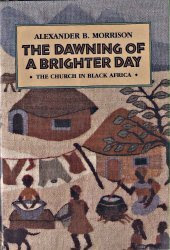
Book Notice: The Dawning of a Brighter Day

Alexander B. Morrison, The Dawning of a Brighter Day: The Church in Black Africa. Salt Lake City: Deseret Book Company, 1990; 149 pp.

The Dawning of a Brighter DayThough Mormons have always zealously sought to convert others to their faith, in many ways their “last frontier” has been Africa. Given its long history of racism toward Africans, the LDS church’s early missionary efforts generally steered clear of black Africa. All of this changed when the LDS church released “Official Declaration—2” in 1978, allowing “worthy” Mormon males of African descent to hold the priesthood. Today the church reports amazing success over much of the continent, and with the recent announcement of the first black African general authority, Mormonism seems poised for even greater expansion—and confrontation with evangelical Christians.
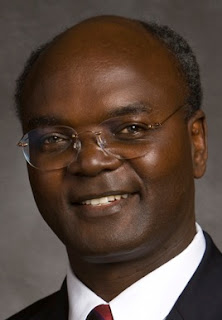
Alexander B. Morrison, now an emeritus member of the First Quorum of the Seventy, recalls his church’s transformation from outsider to “contender” in Africa in The Dawning of a Brighter Day. Even though the book is now out of print, the fact that it was released by the official LDS publishing house testifies to its importance in understanding the changing face of Mormonism in Africa.

At the church’s October 1987 general conference, Morrison declared that “our humble African brothers and sisters are well prepared to receive and obey the fulness of the gospel of Christ”—that is, the message of Joseph Smith. Let us pray that the Body of Christ will prepare itself and resist.

From the inside cover:
“In some ways establishing the gospel in Africa represents the most difficult challenge the Church has ever had to face....We will succeed in Africa only as we learn and come to understand the oftentimes confusing social, political, historical, and economic realities of that vast continent and base what we do on real knowledge.”

So writes Alexander B. Morrison....In The Dawning of a Brighter Day, Elder Morrison describes some of the “confusing realities” of Black Africa, particularly as they pertain to proselyting efforts of the Church there.

“The golden key that unlocked the door to bringing the fullness of the gospel to Black Africa was the revelation on priesthood, received in June 1978,” he explains. Since then, missions and stakes have been established in several countries, and many faithful individuals have been converted and are ass uming leadership roles among the members.

Today, “the clouds if a long night’s darkness are beginning to roll away from Africa as a new day dawns,” Elder Morrison concludes. “It is a day whose light is the Son of God, a day made brighter by the glow of the glorious gospel of Christ.”

April 17, 2009

Weekly Round-Up

Here's the latest for this week's round-up:

Joseph Sitati1) Peggy Fletcher Stack, "Africa's 'Mormon superstar' is first black African LDS general authority" in the Salt Lake Tribune newspaper. Three decades after worthy African males were allowed to hold the Mormon priesthood, the LDS church's first black African general authority has been named. Joseph W. Sitati is a Kenyan and former President of the Nigeria Calabar mission. His appointment is evidence of the LDS church's growing commitment and missionary success in Africa.

2) Peggy Fletcher Stack, "LDS Swahili Branch unites African Mormons" in the Salt Lake Tribune newspaper. As Mormonism continues to spread throughout Africa, it is also seeking to convert Africans here in America. This article reports on a branch in Utah that conducts its meetings in Swahili.

3) John MacArthur, "Doctrine IS Practical" in Pulpit Magazine. As only MacArthur can, he gives a compelling demonstration of the importance of doctrinal truth for Christians today.

March 20, 2009

Weekly Round-Up

Here's the latest for this week's round-up:

1) Steven Candia, "Kibwetere arrest warrant still on," Josephine Maseruka, "Pastors call for probe over sodomy," and Frederick Kiwanuka, "Luweero cult members arrested" in the New Vision newspaper (Uganda). I wrote of the anniversary of the Kanungu tragedy earlier this week, but many newspapers included several articles related to the cult that tragically ended nine years ago. Here are three from one of the main national papers in Uganda.

2) Joyce Namutebi and Catherine Bekunda, "Govt officials involved in witchcraft, says Kivejinja" in the New Vision newspaper (Uganda). Uganda's internal affairs minister has accused some senior government officials of practicing witchcraft. I have mentioned the need to take witchcraft seriously before, but this report is an important reminder of the challenge it remains in Africa.

3) "Irony in the Big apology" on GetReligion.org and "HBO’s Mormon Temple Ceremony Scene" on the Mormon Coffee blog. If you haven't heard about the recent controversy surrounding the HBO series Big Love portraying portions of the temple endowment ceremony, then be sure to read more and even watch the clip online. It was surprisingly accurate.

March 11, 2009

Book Notice: Brother to Brother

Rendell N. Mabey and Gordon T. Allred, Brother to Brother: The Story of the Latter-day Saint Missionaries Who Took the Gospel to Black Africa. Salt Lake City: Bookcraft, 1984; 161 pp.

Brother to BrotherOne of the greatest obstacles to the missionary advance of the Mormon church in the 20th century was its notoriously racist view of Africans. Beginning with Brigham Young, generations of Mormon prophets and apostles characterized blacks as inferior and deformed (bearing the dreaded “mark of Cain”). Young declared that “a man who has the African blood in him cannot hold one jot nor tittle of priesthood” and warned his brethren that “The moment we consent to mingle with the seed of Cain the Church must go to destruction.”

Not surprisingly, early Mormon proselytizing efforts in sub-Saharan Africa concentrated on white-dominated South Africa and Rhodesia. But after the LDS church’s 1978 “Official Declaration—2” granted Mormon males of African descent the ability to hold its priesthood, the cult has been spreading rapidly across the continent. According to the church-owned Deseret News, noted scholar Philip Jenkins predicts that “African Latter-day Saints will number between 3 million and 4 million in the next quarter century”—a trend that itself presents Christians with a new and growing missionary challenge.

Brother to Brother provides the story of the first Mormon missionaries to black Africa. Written by Mormons and for Mormons, this book offers invaluable insights into the early stages of LDS growth in Africa. Though it’s now out of print, it’s obviously an important reference for our ministry.

From the Inside Cover:
The call came from President Spencer W. Kimball in the fall of 1978: Take the gospel to Nigeria and Ghana. Two specially chosen couples were the first ones called on that demanding but exhilarating mission to Black Africa. This book tells their exciting story.

The welcome mat was spread conspicuously. Not only did they benefit from the widespread Christian beliefs; there were even groups awaiting conversion and baptism, and some of these had set up unauthorized “branches” of the Church. Now was the day of their deliverance. These fine people—unworldly, simple of taste but strong of faith—welcomed the missionaries with great joy, responded willingly and anxiously to their gospel message and counsel, and eagerly received baptism—by the hundreds. Branches and districts were then officially established, and the Lord’s kingdom set down its roots there.

This is the story of faith, patience, persistence, and the ultimate reward—the initial gospel ordinances and all that comes from membership in the true Church. Moving stories abound within the main story: Anthony Obinna and his thirteen-year wait for baptism; the dramatic conclusion to a twenty-four-hour fast; the first baptism; Sunday Ukpong and his bicycle; and always, in those “faraway places with strange-sounding names,” the story penned by faith and conviction.

Written in a flowing, pleasing, narrative style, the book is authored jointly by Rendell N. Mabey, the missionary leader, and Gordon T. Allred, well-known writer on Latter-day Saint themes. It draws heavily on the former’s detailed manuscript journal of over thirteen hundred pages.

For every reader whose heart is in the Lord’s cause of spreading the gospel worldwide, reading this book will be a moving and thrilling experience.

March 6, 2009

Weekly Round-Up

For this week's round-up, I am going to do some catching up:

1) "Membership Growth in 2008" on the LDS Church Growth blog. Would you like to read about the global success of Mormonism? This post summarizes last year's statistics.

2) Kanina Foss, "Court saves Jehovah's Witness girl's life" in The Star newspaper (South Africa). Yes, the Jehovah's Witnesses are very active in Africa too. Here is another example of the trouble caused by their distinctive beliefs.

3) "Church Struggling After Islamists Destroy Building" on Compass Direct News. A sad story about the all too common reality of Islamic persecution. What may surprise some is that this attack took place in East Africa. Let us pray for these Kenyan believers during this difficult time.

February 6, 2009

Weekly Round-Up

Here's the latest for this week's round-up:

1) "Anti-Christian Gaddafi Takes Over as AU Chair" in Catholic Information Services for Africa. I have previously mentioned the controversy surrounding Muammar Gaddafi in East Africa. Now he has been elected chairman of the African Union. His new position could impact the Christian-Muslim relationship in Africa. We'll have to see.

2) "Christians in Africa Face Persecution" on CBN News. Here is an important news story about the persecution facing our brothers and sisters in Christ. The report even mentions Uganda's Lord's Resistance Army. Let us pray for Christians in Africa!

3) "City Opens For Missionary Work In the DR Congo" on the LDS Church Growth Blog. Mormons continue to have success in Africa. Here is a blog post celebrating their latest advance in the Democratic Republic of Congo. Their false claims need to be countered with the true gospel of Jesus Christ.

4) Michael Oh, "Missions as Fasting: The Forsaking of Things Present for the Global Exaltation of Christ" on the Desiring God web site. Would you like to be challenged and convicted? Then listen to or watch Oh's message from the Desiring God 2009 Conference for Pastors. And if you would like to join me in fasting and prayer for our East African ministry, then please let me know.

October 29, 2008

Ask Anything Wednesday: Material on Witnessing to Mormons

Welcome to Ask Anything Wednesday. This month I received two great questions, so I'll answer the first this week and the second next Wednesday. At the same time, please keep the questions rolling in! Just submit your question--on anything!--in the comments section below and I'll consider responding to it in our monthly feature.

Question:
"What do you suggest I read to learn to better witness to Mormons?"

Answer:
Speaking the Truth in Love to MormonsWhile I have responded to a similar question before, I appreciate the opportunity to expand my answer. In considering books, I highly suggest reading Mark Cares' Speaking the Truth in Love to Mormons. Cares is a Lutheran pastor in Idaho who has faithfully witnessed to Mormons for years. His book is easily the best work that I have read on this topic. Additionally, his ministry's web site has a lot of helpful information and his blog is also excellent.

There are many helpful resources elsewhere on the web as well. James White's "Verse Memorization System: Verses Relevant to Sharing the Gospel with Mormons" is very useful. You could learn a lot from web sites such as Mormonism Research Ministry, the Institute for Religious Research's Mormons in Transition, the Mormonism section of 4Truth.net, and others.

If you would like to learn more about Mormonism in general and how their beliefs are different from historic Christianity, I suggest checking out Is the Mormon My Brother?, Mormon America, and Mormonism 101. And if you are firm in your faith and want to dig deep, nothing can replace actually reading Mormon sources themselves. I would start with Gospel Principles.

I could continue, but I'm afraid that this list has already become too long. Feel free to ask me additional questions on witnessing to Mormons. Praise God for your desire to bring the light of the true Jesus Christ to Latter-day Saints!

August 8, 2008

Weekly Round-Up: Prosperity Gospel, "Prophet" Kakande, and Two New Blogs

Here's this week's round-up:

1) Rachel Kabejja, "Prosperity Gospel" in the Sunday Monitor newspaper (Uganda). Here is yet another editorial on this false gospel. Rachel Kabejja laments, “Today’s gospel has taken an amazing twist. There is little or no more preaching about sin and its consequences but rather what somebody can do to be rich, healthy or retain a blessing.... In Uganda, some churches discourage tithing coins and in such churches is where you will find believers standing in queues according to how much they are tithing, which determines the amount of blessing they will get.”

2) Michael Mubangizi, "Inside ‘Prophet’ Kakande’s Church" in the Weekly Observer newspaper (Uganda). This report is an introductory look at Kakande (think of an African Benny Hinn) and his church. Having visited this church before, I can say that it is a good example of people in East Africa misled by a "prophet" promising health and wealth.

3) Mark Cares Weblog. I often recommend Mark Cares' book Speaking the Truth in Love to Mormons. Now he has left a comment to let me know that he has started blogging! Be sure to check it out.

4) Koinonia blog. Since I am introducing new blogs that have come to my attention, here is one started by Zondervan Academic. With evangelical leaders Ajith Fernando, Bill Mounce, Bruce Waltke, Chris Wright, Clint Arnold, Craig Blomberg, Daniel Wallace, Darrell Bock, Gary Burge, John Walton, Lynn Cohick, Mark Strauss, Miles Van Pelt, Tremper Longman, and Walt Kaiser contributing, this will definitely be a must-read blog.

July 30, 2008

Ask Anything Wednesday: Witnessing to Mormons

Welcome to Ask Anything Wednesday. This week I am answering another great question. Please keep them rolling in! Just submit your question--on anything!--in the comments section below and I'll consider responding to it in our monthly feature.

Question:
"We've had a lovely group of elders visiting for almost 4 months now on a fairly regular basis. They've come to church with us (my husband invited them and they said it was the first time they'd been to a Protestant church), and I've had many long hours of gracious conversation with them. I'm truly interested in hearing them explain their dogma and asking them questions. They know I'm a Christian and don't want to convert.

"So, my question is -- am I fooling myself in thinking that this is a good use of my time? I don't mean these young gentlemen are not worth it! They are. I'm wondering if asking questions, probing, being genuinely interested is a biblical approach AND an approach you've seen bear fruit."

Answer:
Developing friendships with Mormons (or other unbelievers for that matter) is always a good use of your time. There are many reasons why it is worthwhile to learn about their beliefs and to ask questions. Having them explain their faith allows you to better understand what they believe, which will help you to share the gospel with them as well as other Latter-day Saints in the future. And asking questions not only clarifies one's beliefs, they also can be used as an effective way to point out inconsistencies or plant seeds of doubt.

At the same time, as you can tell, I do not think a Christian may stop with merely having learned more about another faith. Our Savior has not called us to have a better understanding of what others believe; we are to reach out to them with His good news. Mormons are in rebellion against God and are rejecting Him through a false Christ and a false gospel. Apart from repentance and faith in God's One True Son, they face God's wrath for their sin. Thankfully, He has saved us from His wrath and has provided His people with propitiation for sin (which encompasses all who come to faith, including many Mormons). Who wouldn't want to tell Latter-day Saints about this wonderful redemption?

To learn more, I would highly suggest reading Mark Cares' book Speaking the Truth in Love to Mormons. It is easily the best book that I have read on witnessing to Mormons. You can also check out Cares' ministry or learn more through Mormonism Research Ministry (I used to volunteer for this fine organization).

July 4, 2008

Weekly Round-Up: Ugandan Preaching, the State of Apologetics, A Theologically-Driven Missiology, and Witnessing to Mormons

Here's this week's round-up:

1) Caroline Mbabazi, "The good old sermon" in the Sunday Monitor newspaper (Uganda). Wow. A woman writes about how poor preaching usually is in Uganda, appealing to Creflo Dollar, Joyce Meyer, T.D Jakes, and Rod Parsley as good examples. How desperately churches in Uganda need to grow in biblical knowledge and discernment!

2) William Lane Craig, "God Is Not Dead Yet: How current philosophers argue for his existence" and "Recommended Reading: Books on the existence of God;" Troy Anderson, "A New Day for Apologetics" in Christianity Today (July 2008). Finally, an issue of Christianity Today magazine focusing on the defense of our faith. Whatever one may think of Craig's methodology, these articles are very helpful. I pray that a growing interest in apologetics will spread to East Africa!

3) Bruce Ashford, "A Theologically-Driven Missiology," Part 1, Part 2, Part 3, Part 4 on the Between the Times blog. Ashford is a professor at Southeastern Baptist Theological Seminary who is writing a series of blog posts for Southern Baptists on the relationship between theology and missions. So far he has covered Revelation, the Triune God, and Christ. While I just came across this series, I am very impressed so far. He says, "Our tendency is to affirm Christian Scripture as being inspired by God and without error, and then to ignore Christian Scripture in forming our strategies and methods. It is as if we are saying that 'what' we believe about God is important, but 'how' we practice is not. We think that we can 'bank on' inerrancy and then do whatever we’d like." May many more missionaries see the importance of theology in their service to God.

4) Brett Kunkle, "Getting Mormons to Explain Why," Part 1, Part 2, Part 3 on the Stand to Reason YouTube page. A must-watch video series on witnessing to Mormons. As a former Mormon myself, I heartily recommend it.

June 18, 2008

Book Review: Claiming Christ: A Mormon-Evangelical Debate

Claiming ChristRobert L. Millet and Gerald R. McDermott, Claiming Christ: A Mormon-Evangelical Debate (Grand Rapids: Brazos Press, 2007), 238 pp.

The Apostle Paul warns us against “he that cometh [and] preacheth another Jesus, whom we have not preached,” or offers “another spirit, which ye have not received, or another gospel, which ye have not accepted” (2 Corinthians 11:4). Devious preachers may proclaim another Jesus, another spirit, or another gospel. With this in mind, how does one know which Jesus is the true Jesus? Do Mormons preach the true Jesus? Do evangelicals? Do Mormons and evangelicals believe in the same Jesus? These are the kinds of questions that Mormon scholar Robert Millet and evangelical scholar Gerald McDermott debate in Claiming Christ.

After providing background on their personal friendship, McDermott and Millet take turns interacting on various topics related to Christ. Starting with their sources of authority, the co-authors move on to a discussion of Christ before Bethlehem, the Trinity, Jesus’ passion and atonement, the historical Jesus, the church and the sacraments, salvation in Christ, and the fate of the unevangelized. In each chapter, one writes the main article, the other follows with a response, and a final rebuttal concludes the section. This format allows the reader to grapple with both authors’ views.

Unfortunately, McDermott’s role as an evangelical contributor is compromised by his deficient view of the Bible. He denies biblical inerrancy, questions the sufficiency of Scripture, and rules out the principle of Sola Scriptura (i.e., that the Bible alone is our final authority in faith and practice). Thus, he says “‘The real question, then, is not whether we will be influenced by tradition in our reading and interpreting, but which tradition?’” (20). Unfortunately, McDermott misses the point. Sola Scriptura does not mean that we can interpret Scripture apart from tradition; it means that the Bible is the Christian’s ultimate standard of truth. We can (and must!) subject our traditions to what God has revealed in Scripture. The Word of God is the ultimate arbiter of truth.

Since McDermott denies these fundamental beliefs, he comes across as more interested in maintaining historic orthodoxy rather than in biblical faithfulness. A typical example would be his treatment of the gospel and the relationship between faith and works. Rather than expositing relevant biblical passages, McDermott gives the reader a comparative analysis of the views of Martin Luther and Jonathan Edwards. In the following chapter on the destiny of the unevangelized, McDermott does not try to answer this difficult issue with Scripture; instead, he summarizes the positions of Justin Martyr and Irenaeus, showing that Christians throughout history have been somewhat flexible. Often I was left asking: So what? How is one to know whether these Christians were right or wrong in their views? The Mormons, as it turns out, have an answer: An authoritative prophet tells us. McDermott never effectively counters the Mormon claim with the proper response—namely, that we have authoritative Scripture to enable us to discern truth from error. Orthodoxy is the result of biblical faithfulness. And while church history can assist us in understanding our faith, it must never be the basis upon which we establish our faith.

McDermott often fumbles when trying to point out similarities between Mormonism and historic Christianity. For example, he consistently maintains that Mormons believe Jesus is fully divine. He actually states: “Rejecting the Nicene definition of the Trinity but holding to the full deity of Jesus and salvific value of his cross and resurrection seems not as serious as denying the incarnation and the atonement” (221). But as I have written to him before:

. . . I do not know how you can maintain: “On the LDS and Jesus, it is a fact that the Mormon view of Jesus is better than the Jehovah’s Witness view, which is fully Arian. They do indeed believe Jesus is fully God.” While I have no problem insisting upon the defectiveness of the JW Jesus, the LDS Jesus is no less defective. The LDS do not believe that Jesus is fully God—if we are defining God consistently. The only way one could maintain that the Mormons believe that Jesus is fully God is by committing the fallacy of equivocation, for the God we refer to is nothing like the God of Mormon doctrine. The word "God" is not some nebulous, abstract notion. God has revealed what divinity is to us.

Essentially, the LDS church redefines "God" when applying the term to Jesus. And in his case, it is no different from the Jehovah’s Witnesses, because both refuse to ccept Jesus as the eternal, immutable, omnipotent, omniscient God. Both offer distortions f the one, true Trinitarian God. As you have stated, the LDS Jesus is not the Jesus of lassic orthodoxy. He is a false Jesus—an imaginary Jesus who cannot save.
McDermott’s equivocations throughout this work all too often prevent one from properly understanding the distinct and opposite beliefs which separate Mormonism and evangelical Christianity.

A truly helpful debate between Robert Millet and an evangelical has yet to be published. Nevertheless, I have no doubt that Mormons and evangelicals can engage in far better dialogues than this book presents, and I hope that a far more productive work will come out soon.

June 13, 2008

Mormonism, Blacks, and Africa: 30 Years Since Revelation

This week marks 30 years since Mormon Prophet Spencer W. Kimball had a new revelation lifting his church's prohibition on ordaining black males to its priesthood. Here are a few articles summarizing the milestone:

• Carrie A. Moore, "LDS marking 30-year milestone" in Deseret News (June 6, 2008)
• Carrie A. Moore, "Much has changed for LDS blacks since '78" in Deseret News (June 7, 2008)
• Paul Carden, "'Revelation' Still Spreading Deception in Africa," a Cultic Trend Alert from the Centers for Apologetics Research.

John at LDS center in UgandaNow included in LDS scripture as Official Declaration 2, this sweeping change essentially jump-started Mormonism's aggressive focus to convert Africans to their faith. What has been the result? The Church of Jesus Christ of Latter-day Saints has rapidly grown throughout the continent.

To learn more, make sure that you read the article "Pioneers in East Africa" from the Mormon-published Ensign magazine. Having visited the LDS headquarters in Uganda myself, I can assure you that they continue making significant progress in East Africa. Here is a brief news report on some recent Mormon activity in Africa:


Please pray that the true gospel of Jesus Christ will provide real hope for Mormons in East Africa. And pray that believers throughout Africa will not fall prey to the heresy of Mormonism.