August 15, 2008

Weekly Round-Up: Predicting the Return of Christ, and Testing Revivals

Here's this week's round-up:

1) Manasseh Zindo, "Kenyan lawyer announces 'the return' of Jesus" on the Religious Intelligence web site. While this report is now a couple weeks old, it is nevertheless important. We read about a lawyer-turned-prophet who proclaims that the rapture will occur and Jesus will manifest himself to his people on July 18, 2010. As the article concludes, it warns against taking such predictions lightly, pointing to the Kanungu Massacre in Uganda, when hundreds of followers were killed.

2) John Piper, "Test Revival with Doctrine" on the Desiring God blog. Piper provides much-needed biblical insight in the wake of the unraveling of the Lakeland "revival." As he wisely points out:
Discernment is not created in God’s people by brokenness, humility, reverence, and repentance. It is created by biblical truth and the application of truth by the power of the Holy Spirit to our hearts and minds. When that happens, then the brokenness, humility, reverence, and repentance will have the strong fiber of the full counsel of God in them. They will be profoundly Christian and not merely religious and emotional and psychological.

August 13, 2008

Book Notice: Unveiling Witchcraft

Anatoli Wasswa and Henry Ford Miirima, Unveiling Witchcraft (Kisubi, Uganda: Marianum Press, 2006), 361 pp. Illustrated.

Though witchcraft is often mentioned in East Africa, it is more widely feared than subjected to critical study. Nevertheless, one recent book by Ugandans offers first-person research on witchcraft throughout the region. Wasswa is a Catholic priest and herbalist, while Miirima is a veteran local journalist. Together they have produced the only detailed examination of witchcraft currently available in Kampala’s general-interest bookstores. While I have not yet read it and thus cannot assess its level of scholarship, Unveiling Witchcraft is a noteworthy study of an important but much-neglected topic.

From the back cover:
Unveiling Witchcraft is a very provocative book about witchcraft, a hitherto taboo subject. The publication is important in exposing witchcraft as practised by the witch-doctors.

Witch-craft, which is considered a religion by different peoples worldwide, is the veneration or worshiping (okusamira) of ancestral spirits (bajjajja). Over 1000 years ago witchcraft became a culture or a lifestyle of peoples mostly in Africa. Ancestral spirits in Buganda and Bunyoro-Kitara mean a host of things, such as, lubaale, emizimu, amayeme, emisambwa, ebyookola, etc. In the English language all these are called "Spirits."

By making a bold venture into unveiling witchcraft’s lies and tricks by witch-doctors, the co-authors have opened a new chapter in Uganda particularly and in Africa generally with penetrating insights into traditional religions.

Publisher contact:
Marianum Press
Marianumpltd@utlonline.co.ug

August 11, 2008

Working Together With Stand to Reason

In East Africa, we often have Christians asking us for more resources to help equip them to defend our faith. While the development and translation of new materials is something that will have to wait until our ministry begins full-time in Uganda, we have been blessed to find other apologetics ministries with a global vision willing to help Africans now.

One ministry that has been very helpful is Stand to Reason (STR). Founded by Greg Koukl, STR is an organization dedicated to training Christians to think more clearly about their faith and to make an even-handed, incisive, yet gracious defense for classical Christianity and classical Christian values in the public square. On a personal note, I would like to point out how important this ministry has been in my own spiritual growth. I still have old cassette tapes from Koukl on the Trinity, the relationship between grace and works, and decision making and the will of God. I have also read Solid Ground for years. STR has been a blessing to thousands of believers throughout America.

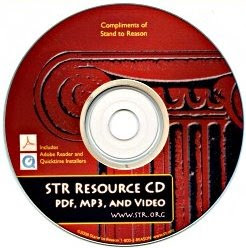
STR Resource CDSo you can imagine my excitement when I heard of their willingness to partner with us as we seek to advance biblical discernment in Africa. Over the last several months, we have been working together to make a CD-ROM that will help Ugandans to grow in their knowledge of God's Word and to defend Christianity against falsehood. The result is a self-contained CD, including all of the contents of their web site in PDF format, MP3s of some of their most critical audio resources, and even QuickTime videos answering fundamental questions about Jesus.

The STR Resource CD—developed specifically for ministry distribution outside the U.S.—is an efficient and inexpensive way of placing a large amount of solid information into the hands of the many Christians in East Africa who have some access to a computer but little or none to the Internet. As you can see, this is one example of how we can work together to help our African brothers and sisters in Christ.

September EventI appreciate STR's willingness to produce such a wonderful resource. And I look forward to seeing what we can accomplish together in the future. Koukl himself has been very gracious and supportive. As a matter of fact, he has agreed to speak at our upcoming event "Awakening Africa: Guarding the Gospel" next month at the historic Bowers Museum in Southern California. If you will be in the area on September 27th and would like to know more, please let me know.

God is truly blessing the Africa Center for Apologetics Research. Momentum is growing. Churches, ministries, and individuals are coming together to make a difference. I can't wait to see what God will do next!

August 8, 2008

Weekly Round-Up: Prosperity Gospel, "Prophet" Kakande, and Two New Blogs

Here's this week's round-up:

1) Rachel Kabejja, "Prosperity Gospel" in the Sunday Monitor newspaper (Uganda). Here is yet another editorial on this false gospel. Rachel Kabejja laments, “Today’s gospel has taken an amazing twist. There is little or no more preaching about sin and its consequences but rather what somebody can do to be rich, healthy or retain a blessing.... In Uganda, some churches discourage tithing coins and in such churches is where you will find believers standing in queues according to how much they are tithing, which determines the amount of blessing they will get.”

2) Michael Mubangizi, "Inside ‘Prophet’ Kakande’s Church" in the Weekly Observer newspaper (Uganda). This report is an introductory look at Kakande (think of an African Benny Hinn) and his church. Having visited this church before, I can say that it is a good example of people in East Africa misled by a "prophet" promising health and wealth.

3) Mark Cares Weblog. I often recommend Mark Cares' book Speaking the Truth in Love to Mormons. Now he has left a comment to let me know that he has started blogging! Be sure to check it out.

4) Koinonia blog. Since I am introducing new blogs that have come to my attention, here is one started by Zondervan Academic. With evangelical leaders Ajith Fernando, Bill Mounce, Bruce Waltke, Chris Wright, Clint Arnold, Craig Blomberg, Daniel Wallace, Darrell Bock, Gary Burge, John Walton, Lynn Cohick, Mark Strauss, Miles Van Pelt, Tremper Longman, and Walt Kaiser contributing, this will definitely be a must-read blog.

August 4, 2008

Biblical Literacy vs. Apologetics: Responding to Kobusingye (Pea)

Last week, I was made aware of a blog post written by Kobusingye (also known as Pea) on our YouTube video series "The Challenge of Cults in East Africa." Unfortunately, the entire WordPress blog site has been taken down, but you can still find Pea's post here. In any case, I wanted to take the opportunity to interact with Pea's critique of ACFAR (and since I don't know whether Pea is a man or a woman, I will use the generic "he" when referring to this blogger).

First, I appreciate Pea's willingness to think through the role of apologetics in the Christian life. He correctly points out the common problem of biblical illiteracy in Africa and is looking for a God glorifying solution. Thus, it is with respect to my co-laborer in Christ that I must disagree with his reasoning and conclusion.

The center of Pea's argument is maintaining that biblical literacy rather than apologetics is the solution to Africa's cult problem. However, in doing so he has misunderstood the relationship between biblical literacy and apologetics. Defending the faith comes out of biblical literacy. So, to learn apologetics is to become biblically literate. Christians cannot defend God's truth unless they first know God's truth.

Additionally, Pea says that we must devote ourselves to God's truth without bothering to learn about error. But this conclusion is simply unbiblical. The Apostle Paul wrote to Titus that church leaders must "be able to give instruction in sound doctrine and also to rebuke those who contradict it" (Titus 1:9). How can church leaders rebuke those who contradict God's truth without knowing what these false teachers are claiming? As a matter of fact, Pea has learned some Jehovah's Witnesses doctrine since in his article he points out their denial of the deity of Jesus Christ.

Pea also seems to adopt a "me-and-my-Bible-are-enough" approach to our faith. But we must not forget that Christ never intended for us to live out our spiritual lives by ourselves or to fight for our faith alone. He has given us His body, the church, with brothers and sisters in Christ to work together in advancing His kingdom. This is where books and resources can be helpful. Believers are able to share their God-given insights with others in these materials, allowing many followers of Christ to grow in their faith and to avoid error. Can books lead to forgetfulness of the Main Book? Sure. But this is due to the sinful tendencies in one's heart, not the result of simply learning through books themselves.

Pea closes his critique by asserting that East Africa does not need a center for apologetics research. He writes, "To tell me Biblical Literacy is impossible without a Research Centre is the same as Juanita Bynum saying she cannot pray for the nations until and unless the church donates $200,000 for her to build a threshing floor to pray on. It's a little too ridiculous for me." While I would never claim that biblical literacy is impossible in Africa without ACFAR, I nevertheless hope that African believers will see the value of having a place to go where they can learn more about responding to the cults and false teachings that regularly challenge their faith. May God use our ministry to further biblical literacy and to defend His truth!

August 1, 2008

Weekly Round-Up: Healers, Seventh-day Adventists, and Religious Competition

Here's this week's round-up:

1) Frank Mugabi and Richard Adrama, "Bishop warns on healers" in New Vision newspaper (Uganda). This article shows the problem of African Christians continuing to use traditional healers, with an Anglican bishop suggesting that they go to doctors for medical help.

2) Jack Nduri, "Seventh Day Adventist now braves evangelical wave" in Eastern Standard newspaper (Kenya). The Seventh-day Adventists (SDA) in East Africa are continuing to be imaginative in their efforts to grow. The last paragraph is sobering: "Under the East Africa Union, the Seventh Day Adventist Church has a population of more than 42,422,000."

3) Harold Ayodo, "Scramble for faithful" in Eastern Standard newspaper (Kenya). Here is an interesting report from Kenya on religious competition where churches are "scrambling for souls."