June 30, 2008

Movies on Uganda

Since my family is preparing to serve our Lord in Uganda, we are striving to learn as much as we can about this East African country. While much of our research has been through books, several movies have also been very valuable. Would you like to learn a little more about Uganda? Here are some films to check out:

Movies about Idi Amin
Idi Amin was a brutal dictator in Uganda throughout the 1970s. During his time in power, hundreds of thousands of people were murdered. These were dark years for Uganda.

General Idi Amin Dada1) General Idi Amin Dada: A Self Portrait (1974). A french documentary filmed with the full permission of Amin. A rare opportunity to see and hear Amin in his own words. Needless to say, he was not happy with the final result. I would suggest watching this movie after already becoming somewhat knowledgeable of Amin and his reign. Since this documentary came out over 30 years ago while Amin was still in power, it does not set up much historical context. This film is most helpful in getting a deeper understanding of Amin.

Raid on Entebbe2) Raid on Entebbe (1977). A made for TV docu-drama staring Peter Finch, Charles Bronson, and others. Based on the real events of an Israeli military assault on the Entebbe Airport in Uganda, it pretty much sticks to the facts and is enjoyable. As a late '70s TV movie, the quality is limited and the pacing is somewhat slow, but I still found it helpful to watch a reenactment of a Palestinian airplane hijacking involving Uganda and Amin.

The Last King of Scotland3) Last King of Scotland (2006). A recent movie revealing Amin through the lens of his (fictional) personal physician. Forest Whitaker won an Oscar for his portrayal of Idi Amin. This film effectively displays the brutality of the Amin regime, however I found the nudity and sex inappropriate and unnecessary. The violence is also quite graphic at times. As a result, I have to issue a strong caution with this movie.

Movies about the Lord's Resistance Army
The Lord's Resistance Army (LRA) is a rebel guerrilla army at war with the Ugandan government. This conflict has been going on for over 20 years, leaving many dead, villages overrun, and numerous children forced to become soldiers. Mainly operating in northern Uganda, the LRA is led by Joseph Kony.

1) Invisible Children (2006). A documentary made by high school graduates who came across the sad reality of children in Uganda who are trying to avoid becoming child soldiers while living without family as night commuters. My wife and I were both heartbroken after watching this movie. An eye-opener which raises important issues that must be addressed.
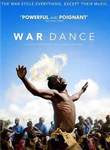
War Dance2) War/Dance (2007). A documentary on children in northern Uganda living in a displacement camp who are seeking to win the national music and dance competition. This movie offers an amazing contrast between the horrors of living in the LRA conflict and the hope of winning a major contest. I highly recommend this movie.

Some of these movies are not easy to find, but we were able to take advantage of NetFlix's vast catalog. In any case, these movies will be well worth your time. And if you ever have the chance to check them out, feel free to leave your own comments below.

June 27, 2008

Weekly Round-Up: Islam in Uganda, Lausanne in Africa, Piper on Mystery

Here's this week's round-up:

1) David Tash Lumu, "Conflict dominates Kampala Islamic meet" in the Weekly Observer newspaper (Uganda). Here is an interesting summary of a recently completed Islamic conference in Kampala, Uganda's national capital. Once again, we see the growing influence of Islam throughout East Africa.

2) "CT2010 and Africa: April 2008 Nigeria Consultation" in the Lausanne Connecting Point, June 2008. This article talks about the continuing preparations for Lausanne 2010 in South Africa, including African concerns and contributions. May we all continue to pray as this historic gathering comes together.

3) John Piper, "Knowledge Increases Mystery" on the Desiring God blog. Do you think that studying theology minimizes the mysteriousness of God? Piper correctly shows us how the more we learn about God and His truth, the more we know and glorify Him as mysterious. A great post!

June 25, 2008

Ask Anything Wednesday: Christian Satire

Ask Anything Wednesday may have been on hiatus, but it is now back as a monthly regular. I have received a few questions so far, but please keep them rolling in for future editions!

Question:
"Is Christian Satire wrong?"

Answer:
Maybe. I don't think satire is prohibited for Christians. After all, even our Savior used it! At the same time, we need to probe into the use of Christian satire. Why does one want to use it? How is it used? These kinds of questions must not go unanswered.

A Serrated EdgeDouglas Wilson has actually written a book on this subject, A Serrated Edge: A Brief Defense of Biblical Satire and Trinitarian Skylarking (I admit that I haven't read it yet, but it has been on my reading list since it came out!). Since this book's release, there has also been some helpful interaction between Wilson and John Frame--see Frame's Review of Douglas Wilson, A Serrated Edge and Wilson's Response to John Frame’s Review of A Serrated Edge.

Used wisely (and Wilson lays out some excellent principles), Christian satire can be very effective. However, Christian satire can also be dangerous when not done properly. I personally enjoy good satire, but would be very careful in producing it myself. Above all, I would want to glorify God in all things, and that includes in exposing folly, vice, or stupidity.

June 24, 2008

Ask Anything Wednesday Returns Tomorrow

Ask Anything Wednesday is returning tomorrow! Do you have any questions about the Africa Center for Apologetics Research? Do you have a question about witnessing to cult members? Do you want to know what I am reading right now? Anything is fair game!

Just ask and I'll try to answer it. The easiest way to submit a question for tomorrow is simply to post it as a comment below. I can't wait to see what you come up with!

June 23, 2008

Learning at the Feet of Müller

George MullerI wish I could say that my faith in Christ always remains strong. But in the ups and downs of becoming a missionary, as I seek to raise awareness and support for our East African ministry, my trust in the Lord’s care and provision wavers. Thankfully, God has given me a good church and faithful friends to encourage me and to spur me on. One personal friend and fellow church member recently sensed my downcast spirit and suggested that I read a biography on George Müller. Since I’d often heard about Müller but never actually read anything about him, I promised my friend that I’d check it out.

I’m glad that I did! By the following Lord’s Day, I had already finished reading the book. For those of you who don’t know about George Müller, he was a 19th-century British evangelist and pastor who also oversaw a growing number of orphanages. Throughout his life and ministry, all of his accomplishments were realized without his once ever directly asking for financial help. He determined to depend on Christ completely to meet his needs, relying almost exclusively on prayer. What was the result? God provided everything Müller required. Through decades of difficult ministry, He took care of Müller.

If you’d like to know more about this great man of God, I recommend that you get a copy of the biography George Müller: Delighted in God by Roger Steer. You can also listen to John Piper’s message “George Mueller’s Strategy for Showing God.” In any case, I want to quickly list some ways that learning more about Müller’s life has made an impact on me:
  • God uses men of very different backgrounds and beliefs to accomplish His work. In reading about Müller, it didn’t take long for me to start seeing places where I disagreed with him theologically. I had to stop reading and ask myself: Should I nitpick over every little area where I find some fault with this brother in Christ, or can I allow myself to admire his faith and trust in God? We may have our differences, but I came away from my study in awe of this hero of the faith. Müller reminded me of the importance of humility and our need to work with believers of different denominations and theological persuasions in order to further the kingdom of Christ.

  • I must truly trust in Christ—first and foremost—to provide for the Africa Center for Apologetics Research. While I may not believe that Müller’s approach to obtaining support is the only biblical method (e.g., Romans 15:20–24, Philippians 4:10–20), there’s no doubt that he was trusting the Lord to meet his needs. As I let others know of our ministry and invite them to become partners in what we’re doing, it’s too easy to fall into the trap of depending on myself and my efforts to raise our support. True, I may need to actively tell others about our East African ministry, but only God’s blessings will enable us to move forward. Müller challenges me to never forget Who is the Generous Provider—Jesus Christ.

  • I need to spend more time in prayer. Obviously, this point is related to the last, but it’s still key. What I spend my time doing demonstrates where my heart truly lies. If I’m not regularly on my knees in prayer, then my focus isn’t where it should be. One thing becomes clear about Müller—he was a man of prayer. Since I’m dependent on God in my missionary task, should I be any less devoted to prayer? Of course not. Müller is a great example: A man who not only believed in the sovereignty of God but lived his life in light of God’s purpose.
Müller both challenges me and encourages me. I’m challenged by his steadfast devotion to and reliance upon Christ. I’m also encouraged to see God’s faithfulness and love displayed through the ministry of a submissive servant. By God’s grace, I pray that Christ will use me for the glory of His gospel and the advancement of His kingdom.

June 20, 2008

Weekly Round-Up: Greedy Pastors, Ugandan Church Life, a Reward, and a Missions Conference

Here's this week's round-up:

1) Robert Wabomba, "Pastor expels poor worshippers" in the New Vision newspaper (Uganda). Sometimes the greed of prosperity gospel preachers is ridiculously obvious. This news report is yet another example.

2) Caroline Mbabazi, "The harsh reality of today’s modern church" in the Sunday Monitor newspaper (Uganda). A cynical look at church life in Uganda. Unfortunately, what she writes is too often true.

3) Patrick Jaramogi, "1000 Cups receives international award" in the New Vision newspaper (Uganda). This story is on the lighter side of things. But I have previously mentioned my new favorite coffee shop, 1000 Cups in Uganda. Now they have received the first Africa Agribusiness Entrepreneur of the Year Award. Way to go!

4) Heritage Baptist Church Missions Conference 2008, "Christian Imperialism: Extending the Kingdom of Christ through the Foolishness of the Cross." While I will not be able to participate in this conference next month, I would encourage anyone who can attend to register now. With Conrad Mbewe and Paul Washer as speakers, this will not be an event to miss.

HBC Missions Conference 08

June 18, 2008

Book Review: Claiming Christ: A Mormon-Evangelical Debate

Claiming ChristRobert L. Millet and Gerald R. McDermott, Claiming Christ: A Mormon-Evangelical Debate (Grand Rapids: Brazos Press, 2007), 238 pp.

The Apostle Paul warns us against “he that cometh [and] preacheth another Jesus, whom we have not preached,” or offers “another spirit, which ye have not received, or another gospel, which ye have not accepted” (2 Corinthians 11:4). Devious preachers may proclaim another Jesus, another spirit, or another gospel. With this in mind, how does one know which Jesus is the true Jesus? Do Mormons preach the true Jesus? Do evangelicals? Do Mormons and evangelicals believe in the same Jesus? These are the kinds of questions that Mormon scholar Robert Millet and evangelical scholar Gerald McDermott debate in Claiming Christ.

After providing background on their personal friendship, McDermott and Millet take turns interacting on various topics related to Christ. Starting with their sources of authority, the co-authors move on to a discussion of Christ before Bethlehem, the Trinity, Jesus’ passion and atonement, the historical Jesus, the church and the sacraments, salvation in Christ, and the fate of the unevangelized. In each chapter, one writes the main article, the other follows with a response, and a final rebuttal concludes the section. This format allows the reader to grapple with both authors’ views.

Unfortunately, McDermott’s role as an evangelical contributor is compromised by his deficient view of the Bible. He denies biblical inerrancy, questions the sufficiency of Scripture, and rules out the principle of Sola Scriptura (i.e., that the Bible alone is our final authority in faith and practice). Thus, he says “‘The real question, then, is not whether we will be influenced by tradition in our reading and interpreting, but which tradition?’” (20). Unfortunately, McDermott misses the point. Sola Scriptura does not mean that we can interpret Scripture apart from tradition; it means that the Bible is the Christian’s ultimate standard of truth. We can (and must!) subject our traditions to what God has revealed in Scripture. The Word of God is the ultimate arbiter of truth.

Since McDermott denies these fundamental beliefs, he comes across as more interested in maintaining historic orthodoxy rather than in biblical faithfulness. A typical example would be his treatment of the gospel and the relationship between faith and works. Rather than expositing relevant biblical passages, McDermott gives the reader a comparative analysis of the views of Martin Luther and Jonathan Edwards. In the following chapter on the destiny of the unevangelized, McDermott does not try to answer this difficult issue with Scripture; instead, he summarizes the positions of Justin Martyr and Irenaeus, showing that Christians throughout history have been somewhat flexible. Often I was left asking: So what? How is one to know whether these Christians were right or wrong in their views? The Mormons, as it turns out, have an answer: An authoritative prophet tells us. McDermott never effectively counters the Mormon claim with the proper response—namely, that we have authoritative Scripture to enable us to discern truth from error. Orthodoxy is the result of biblical faithfulness. And while church history can assist us in understanding our faith, it must never be the basis upon which we establish our faith.

McDermott often fumbles when trying to point out similarities between Mormonism and historic Christianity. For example, he consistently maintains that Mormons believe Jesus is fully divine. He actually states: “Rejecting the Nicene definition of the Trinity but holding to the full deity of Jesus and salvific value of his cross and resurrection seems not as serious as denying the incarnation and the atonement” (221). But as I have written to him before:

. . . I do not know how you can maintain: “On the LDS and Jesus, it is a fact that the Mormon view of Jesus is better than the Jehovah’s Witness view, which is fully Arian. They do indeed believe Jesus is fully God.” While I have no problem insisting upon the defectiveness of the JW Jesus, the LDS Jesus is no less defective. The LDS do not believe that Jesus is fully God—if we are defining God consistently. The only way one could maintain that the Mormons believe that Jesus is fully God is by committing the fallacy of equivocation, for the God we refer to is nothing like the God of Mormon doctrine. The word "God" is not some nebulous, abstract notion. God has revealed what divinity is to us.

Essentially, the LDS church redefines "God" when applying the term to Jesus. And in his case, it is no different from the Jehovah’s Witnesses, because both refuse to ccept Jesus as the eternal, immutable, omnipotent, omniscient God. Both offer distortions f the one, true Trinitarian God. As you have stated, the LDS Jesus is not the Jesus of lassic orthodoxy. He is a false Jesus—an imaginary Jesus who cannot save.
McDermott’s equivocations throughout this work all too often prevent one from properly understanding the distinct and opposite beliefs which separate Mormonism and evangelical Christianity.

A truly helpful debate between Robert Millet and an evangelical has yet to be published. Nevertheless, I have no doubt that Mormons and evangelicals can engage in far better dialogues than this book presents, and I hope that a far more productive work will come out soon.